
Beautiful in your space.
Meaningful in your life.
Jewish art by Peretz Schmukler.
Art Gallery
Geula
Mikdash
Torah Joy!

Rebbe Bright Side
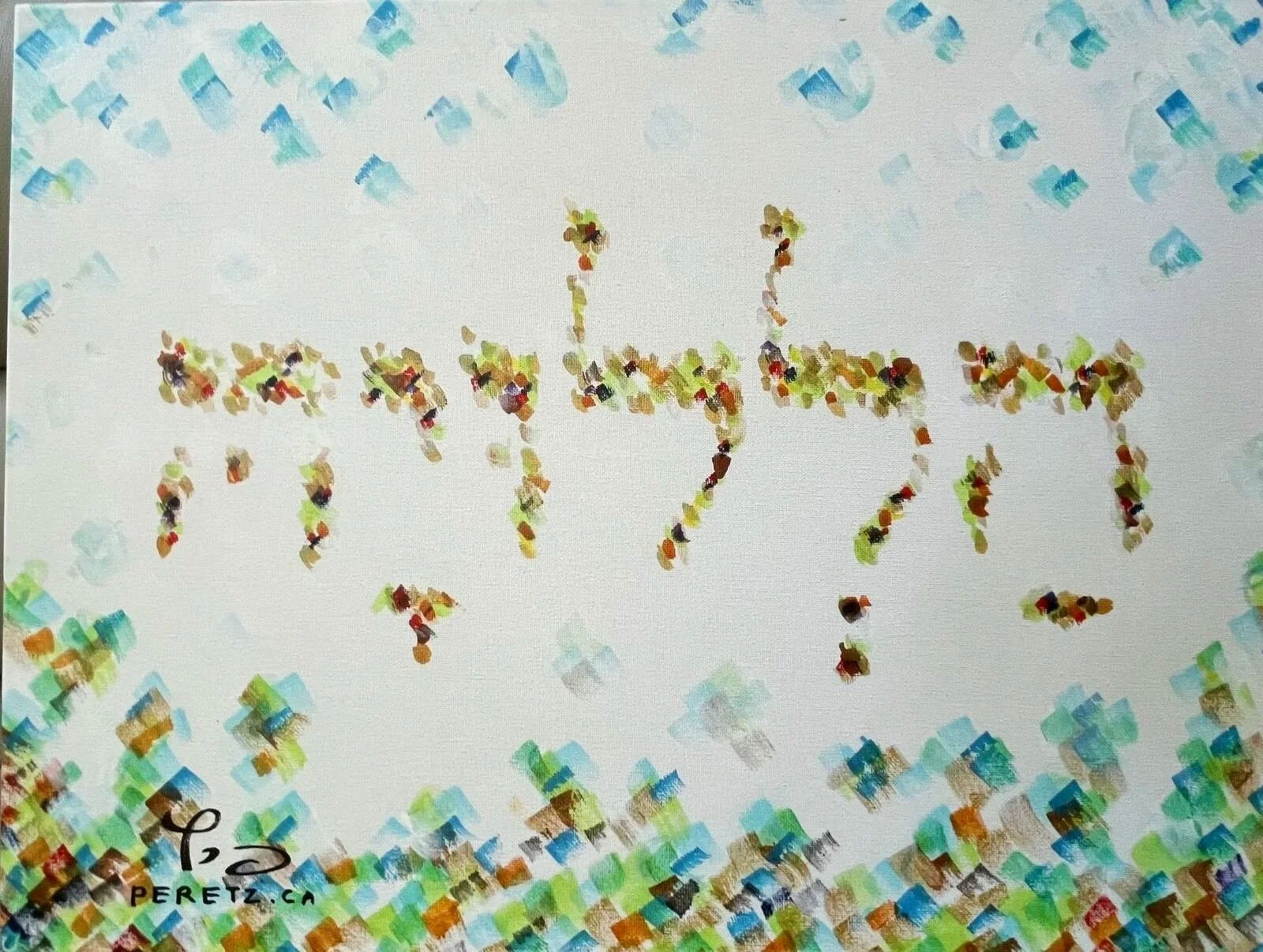
Halleluka
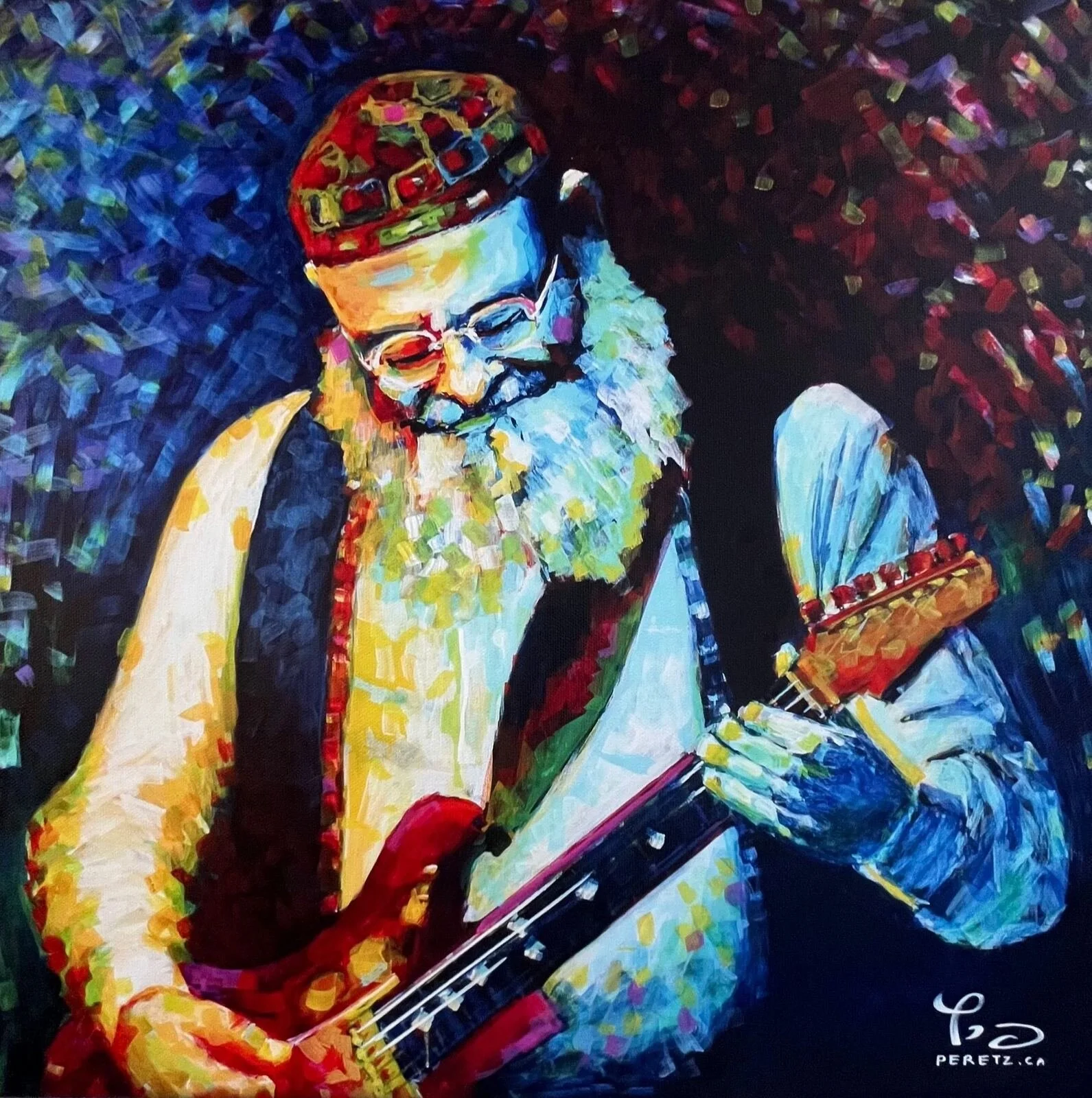
Sing Your Soul
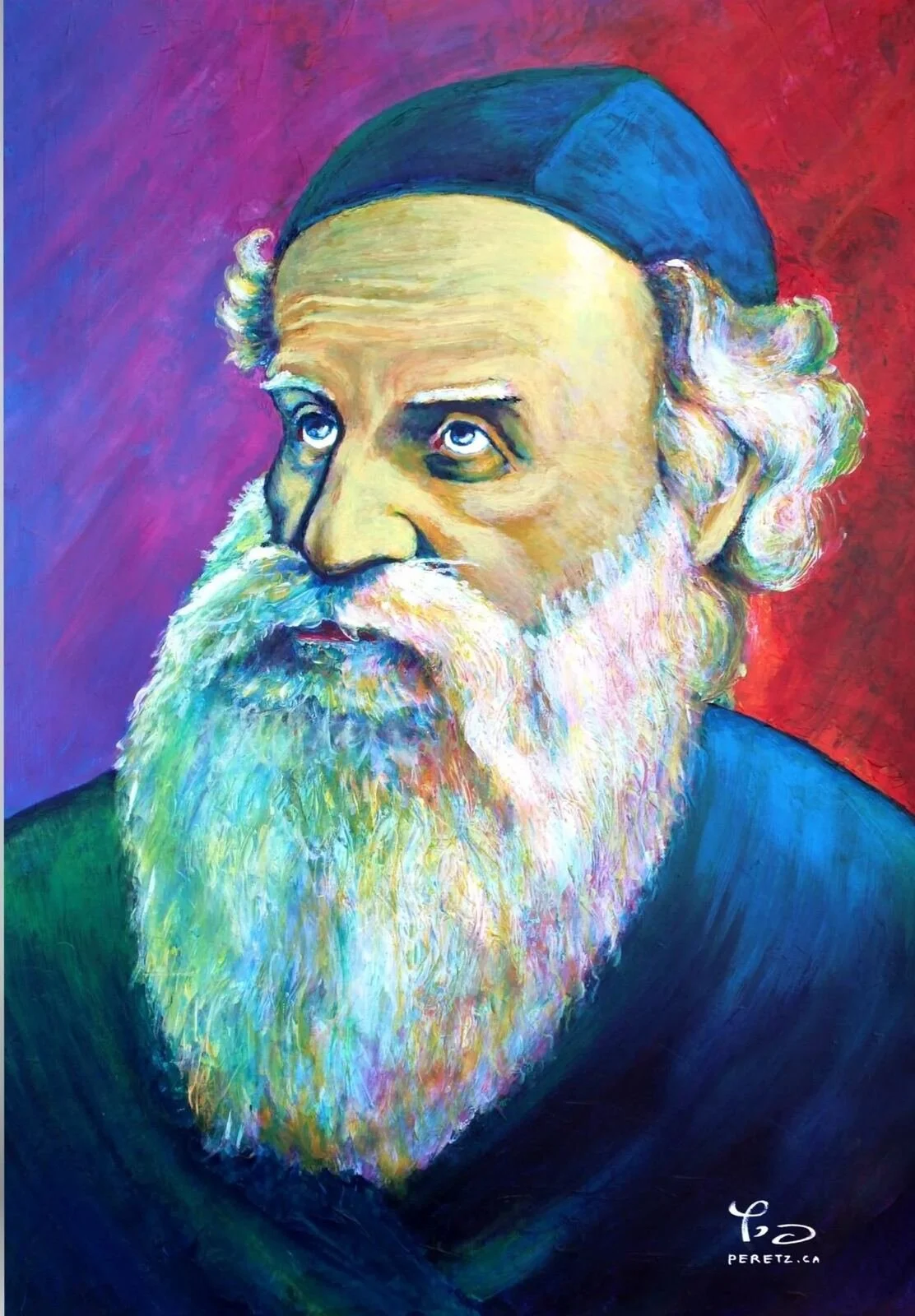
The Alter Rebbe

Emunah Joy!
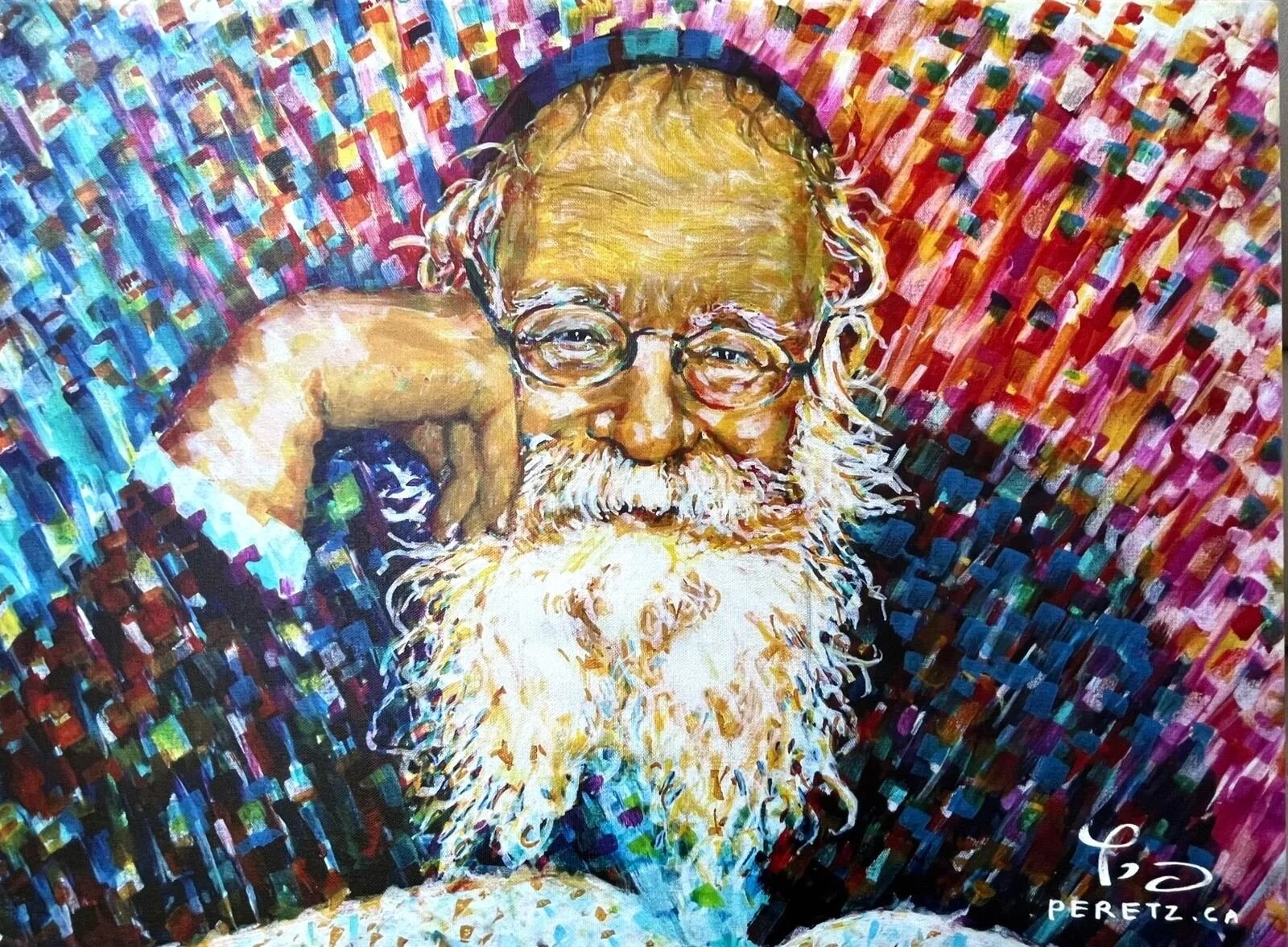
Torah Teacher
Torah Bright
Shabbat Shalom
The Alef
The Yud
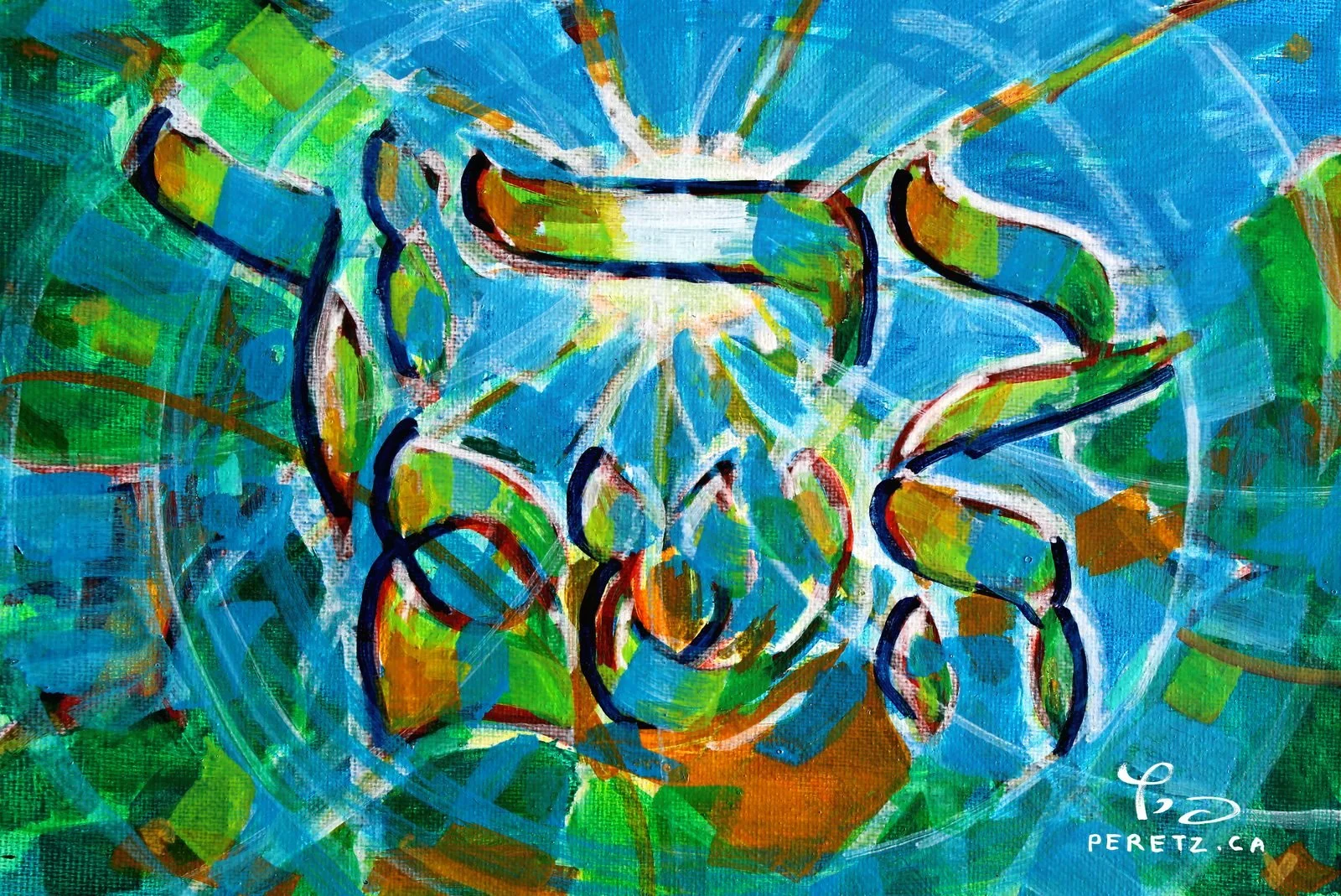
Baruch Hashem
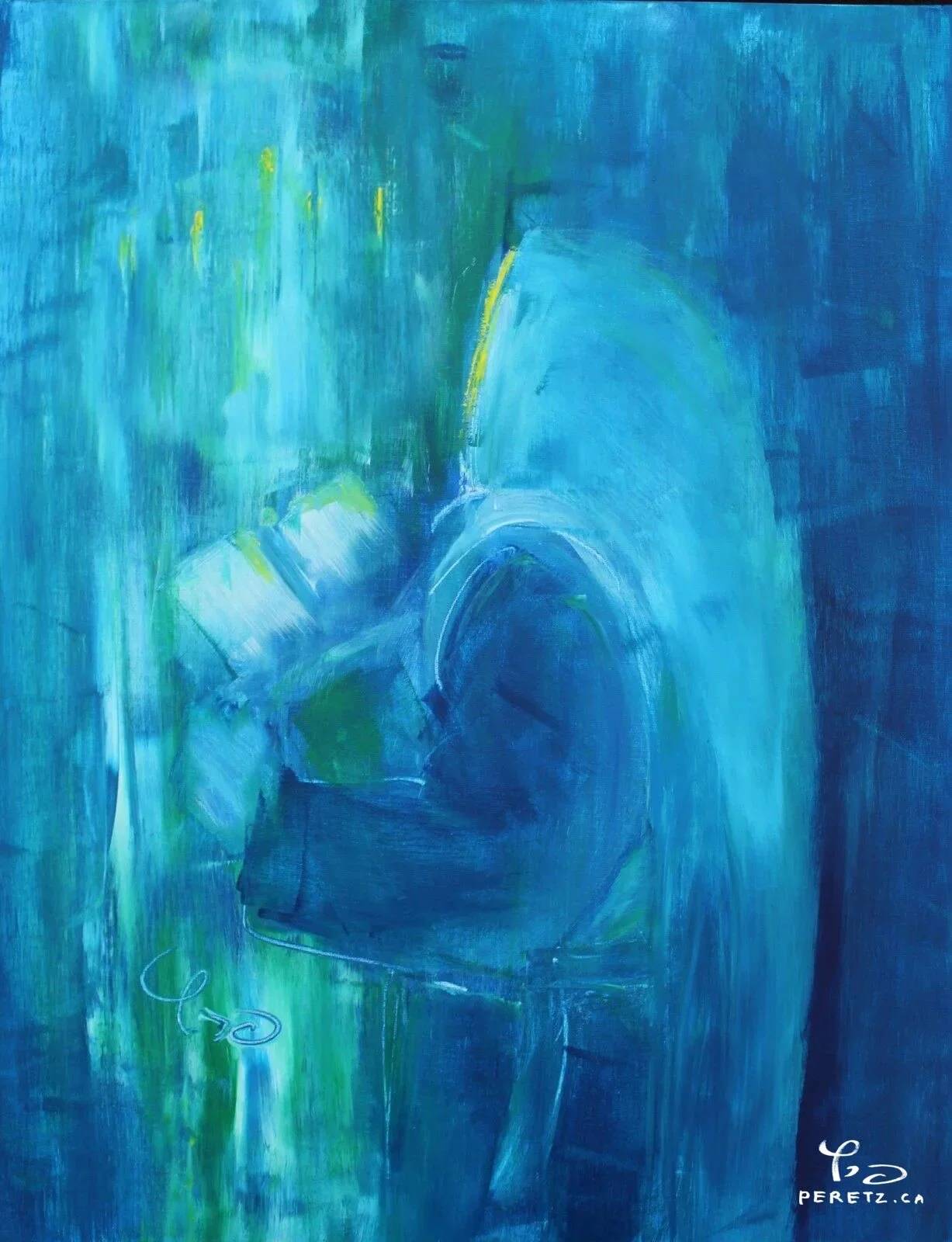
Naran Chai
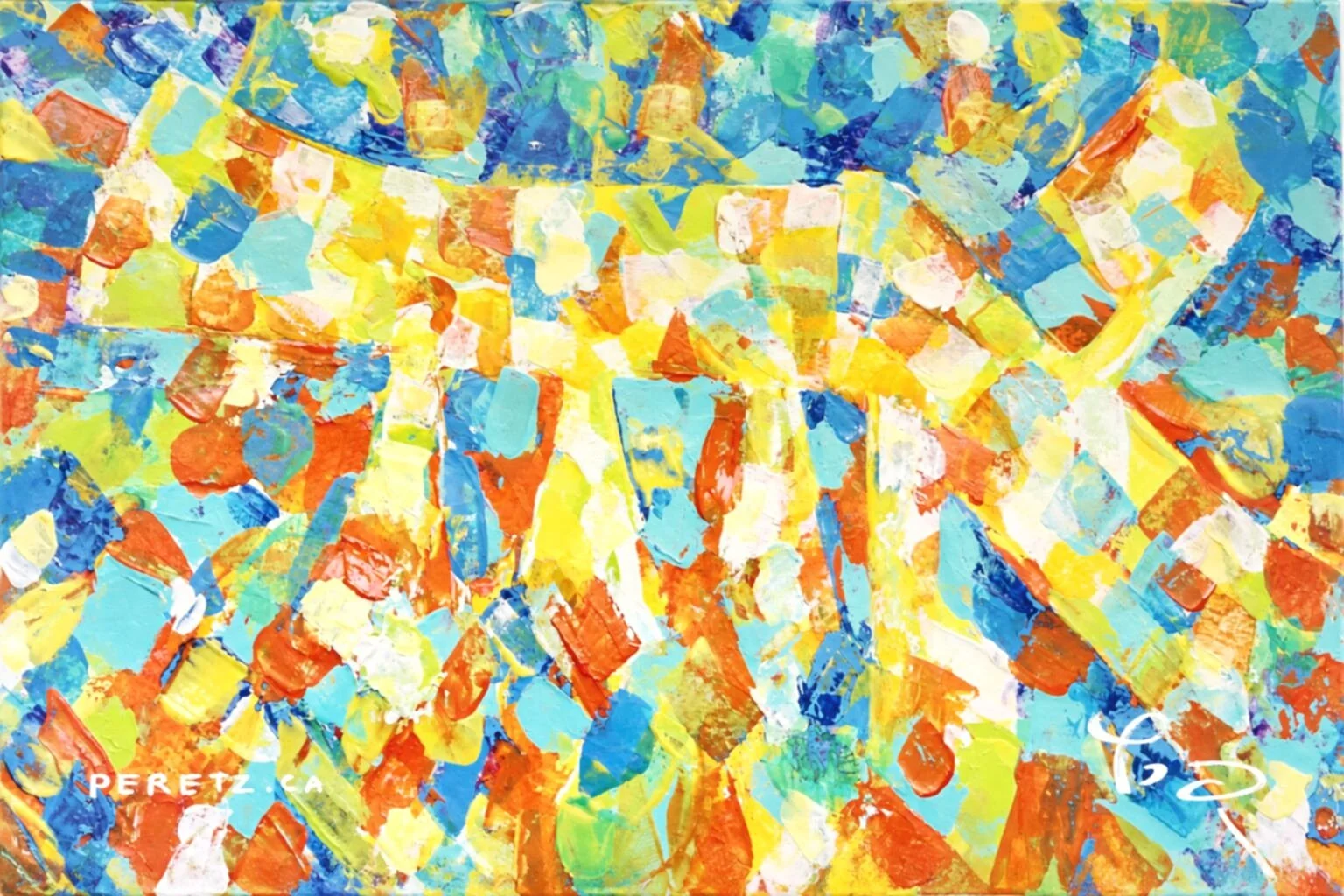
Echod
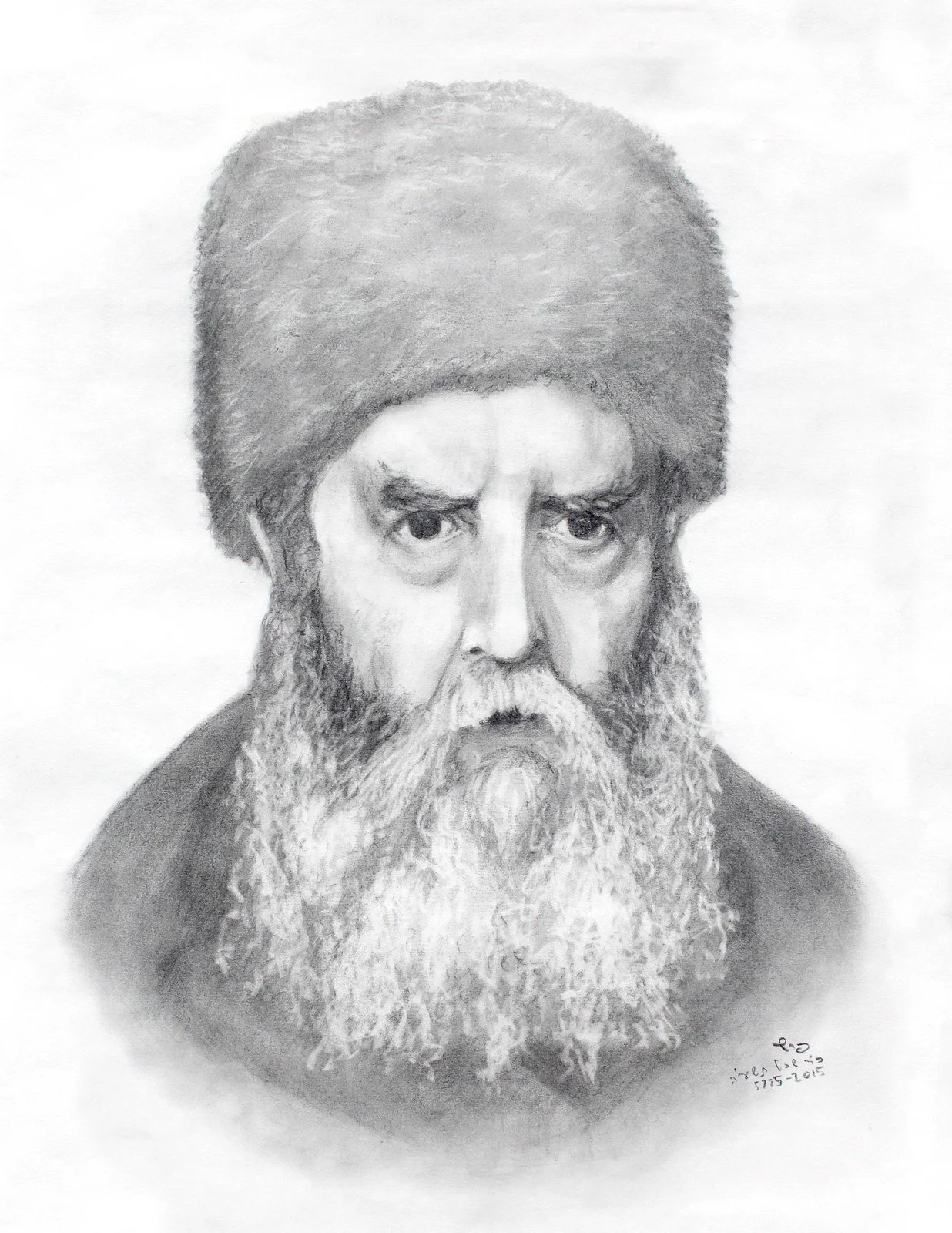
Rayatz — Pensive
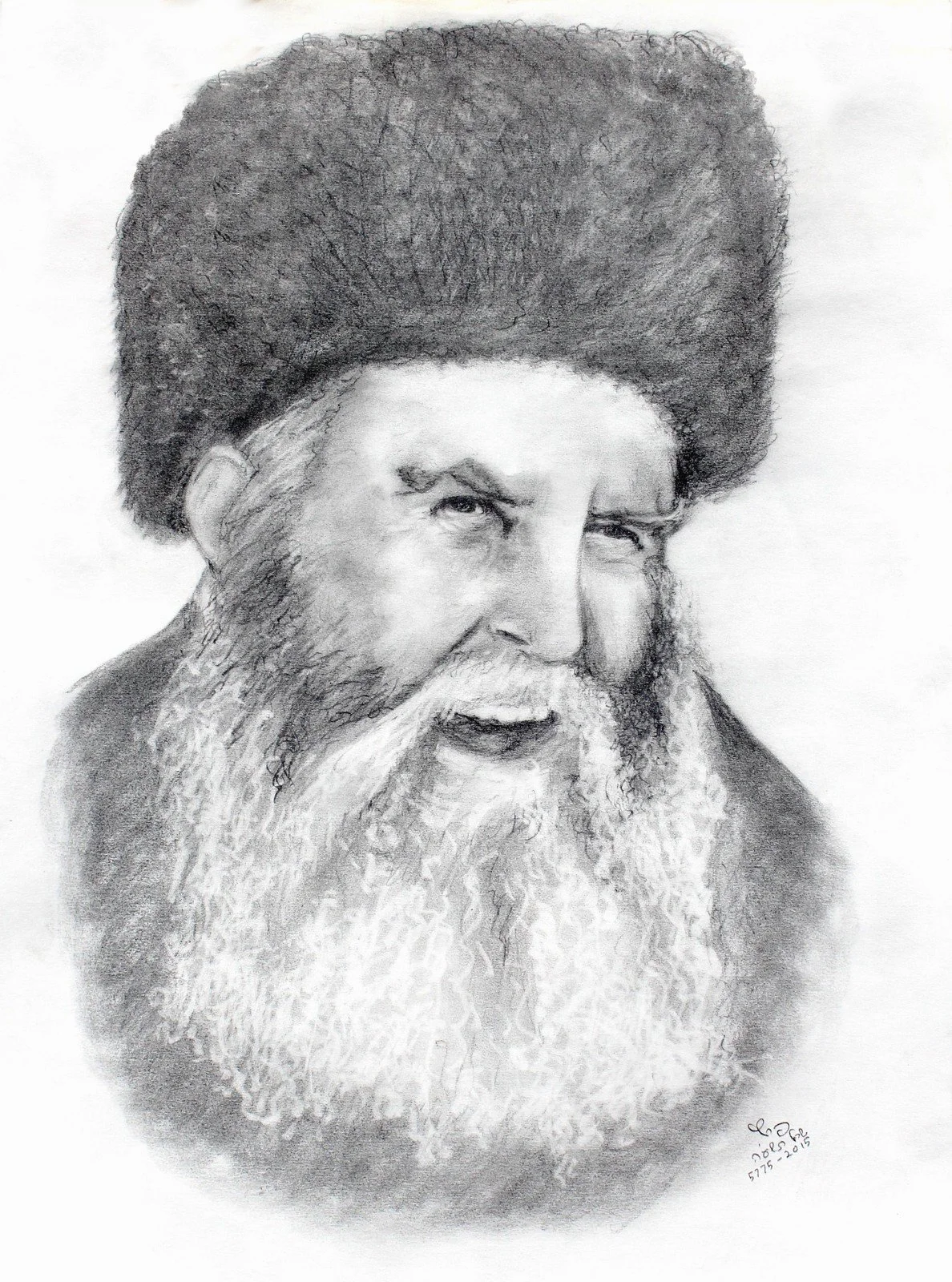
Rayatz — Laugh
ViOhavto
Pray and Sing
Say L’chaim
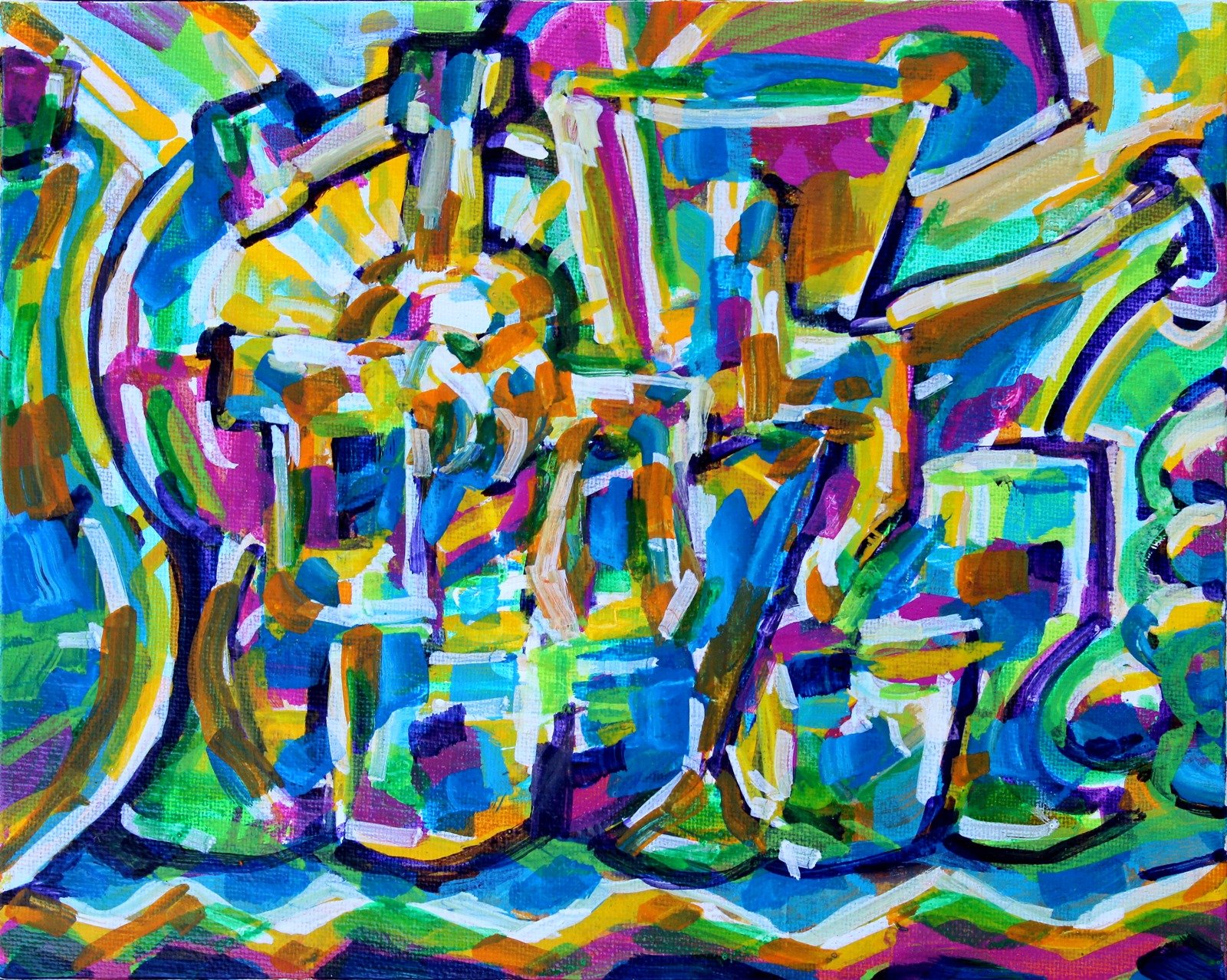
L’chaim — Summertime
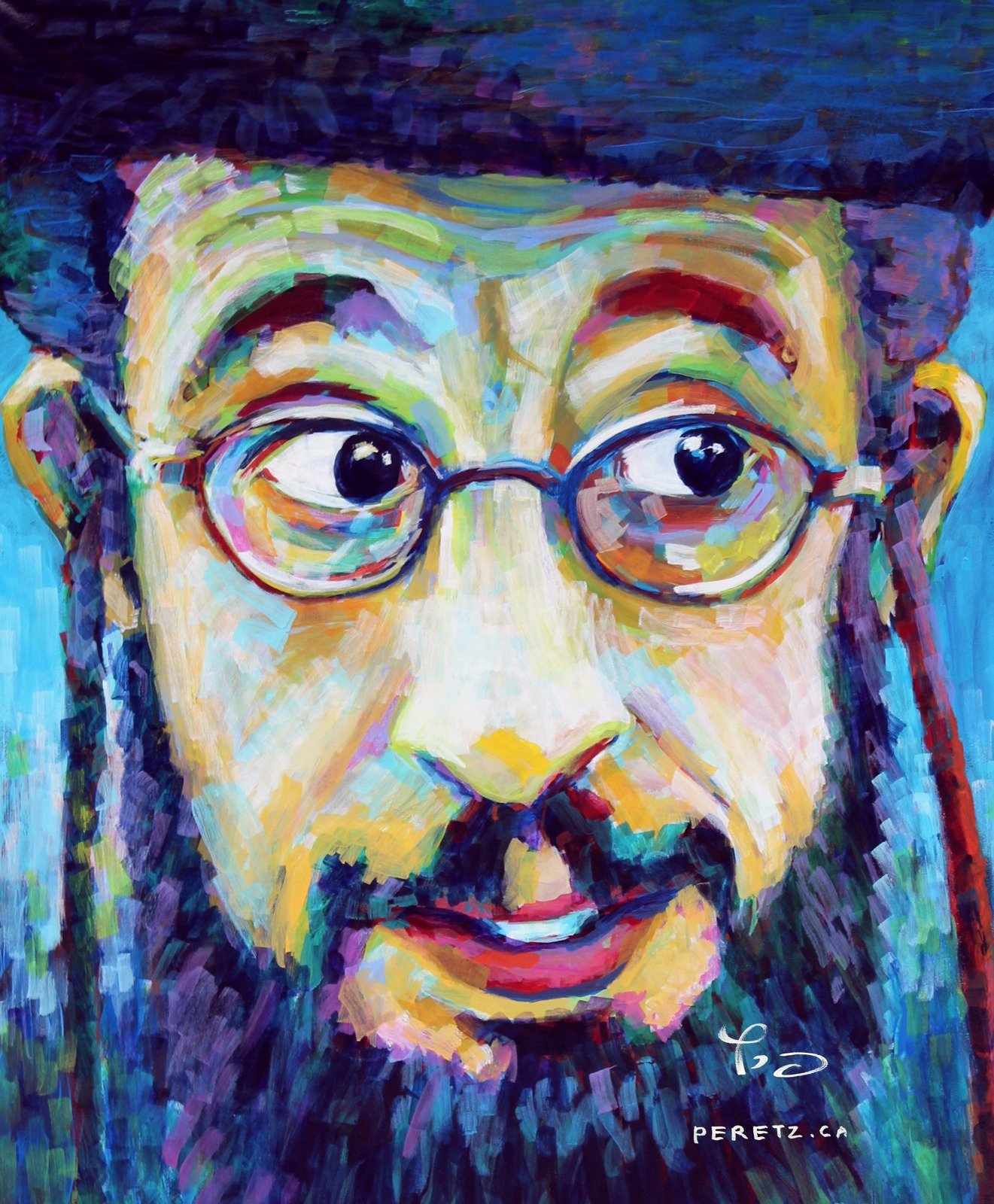
Purim Joy
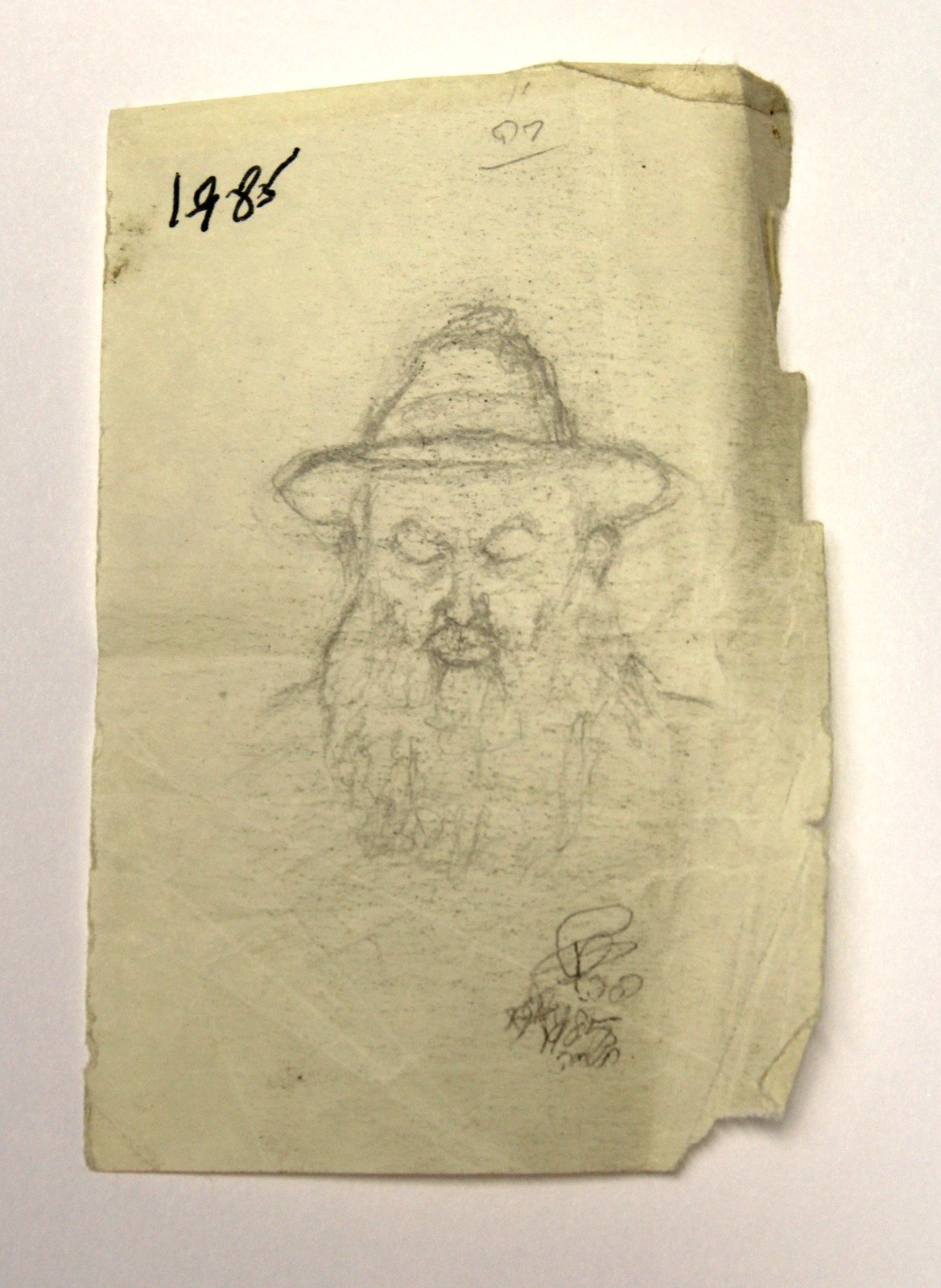
A Note from a Farbrengen
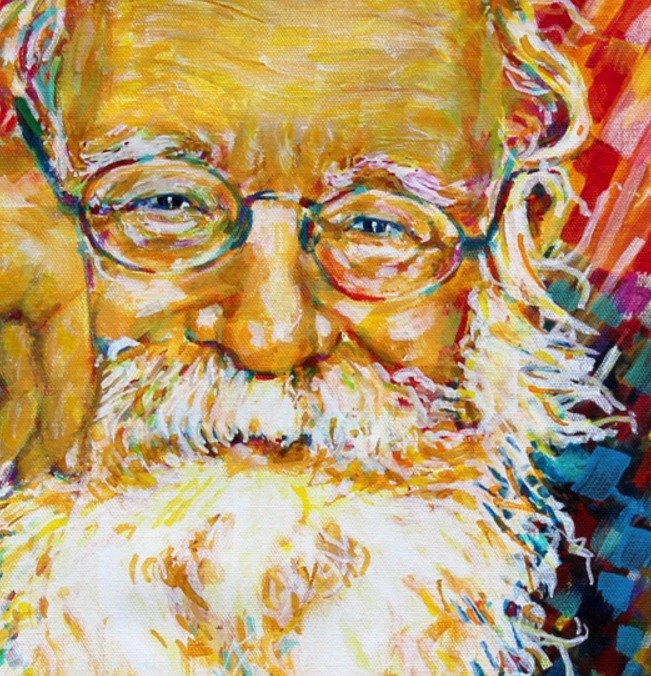
Adin
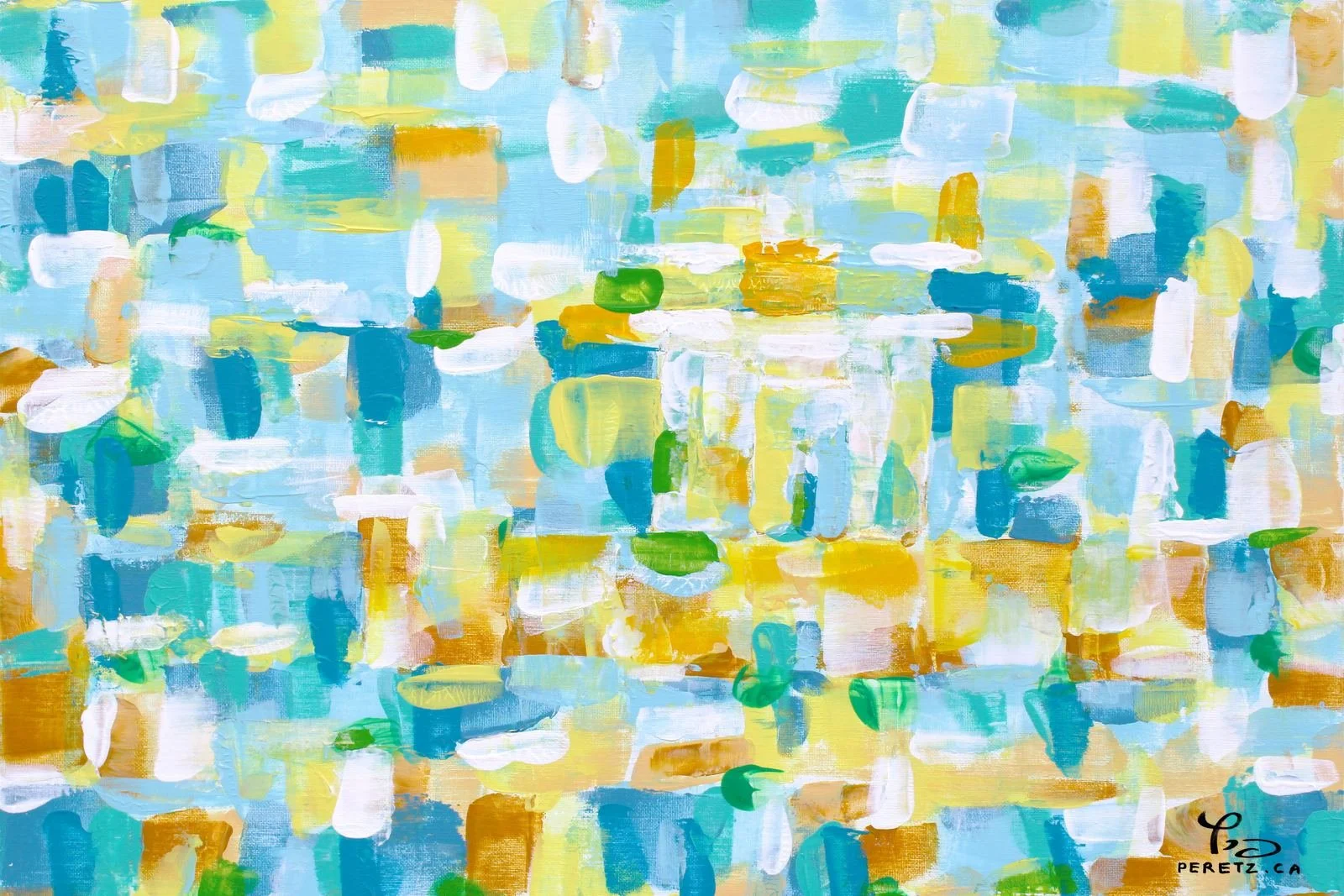
Mikdash Vision
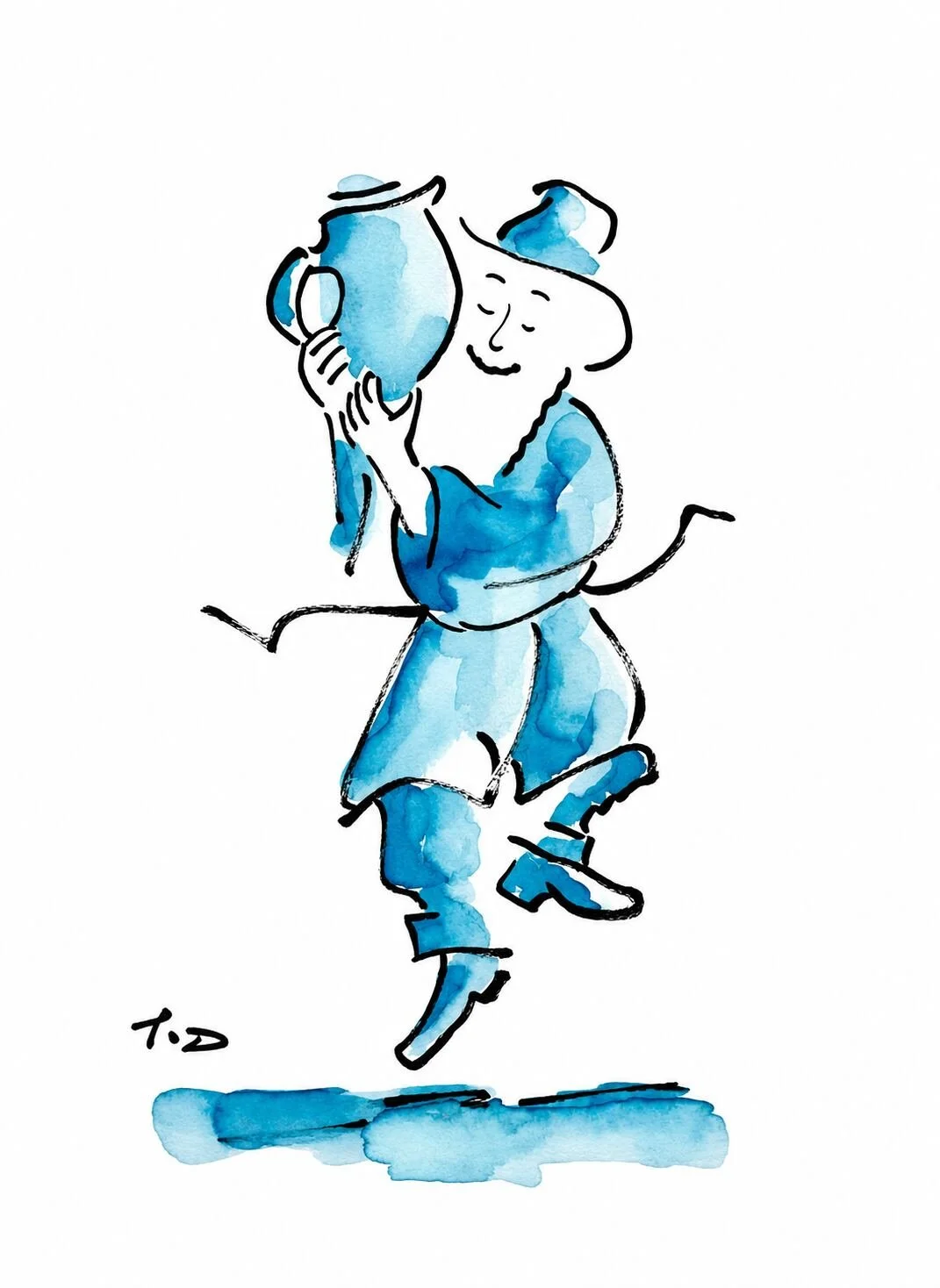
Water Joy
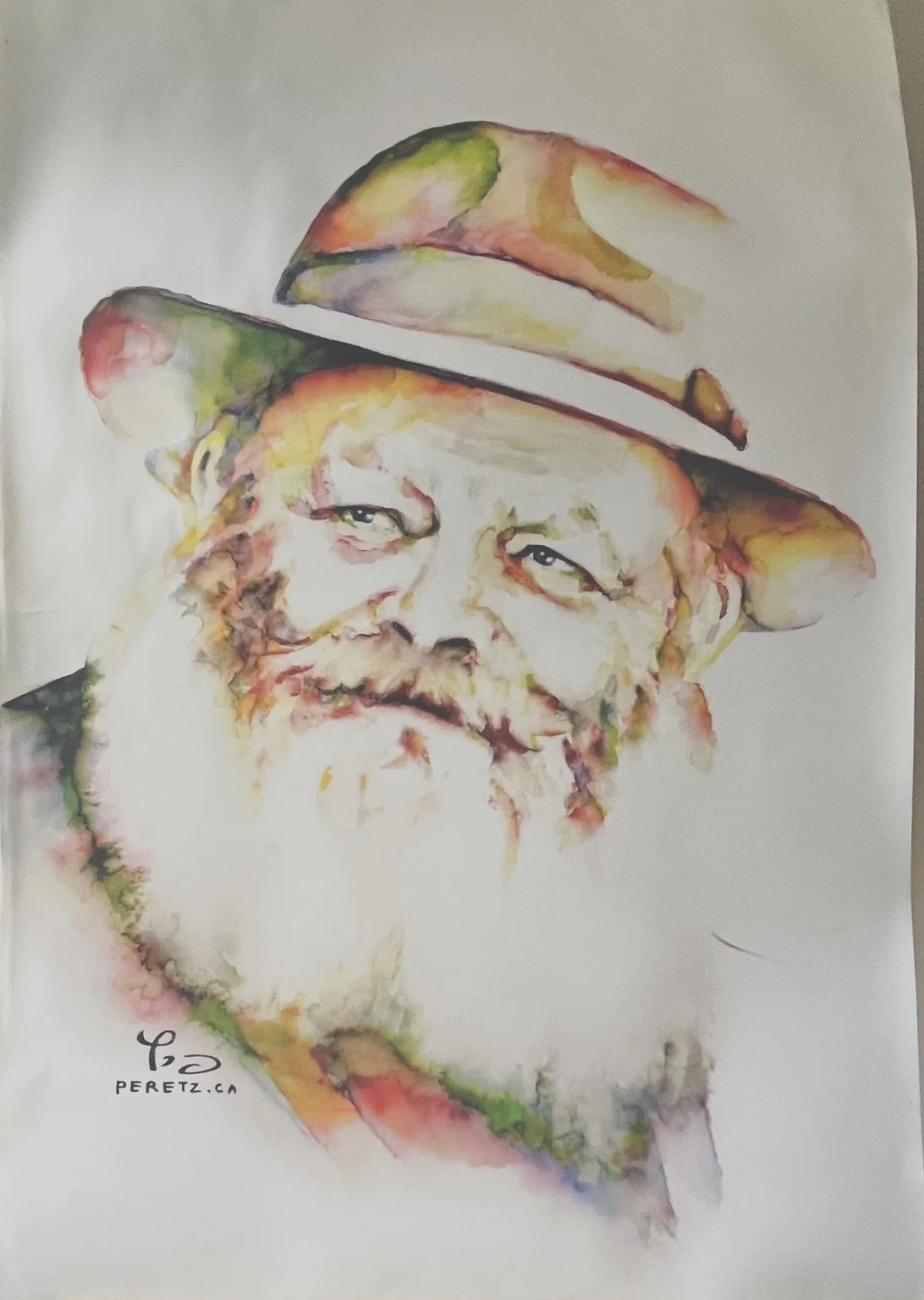
Rebbe Light
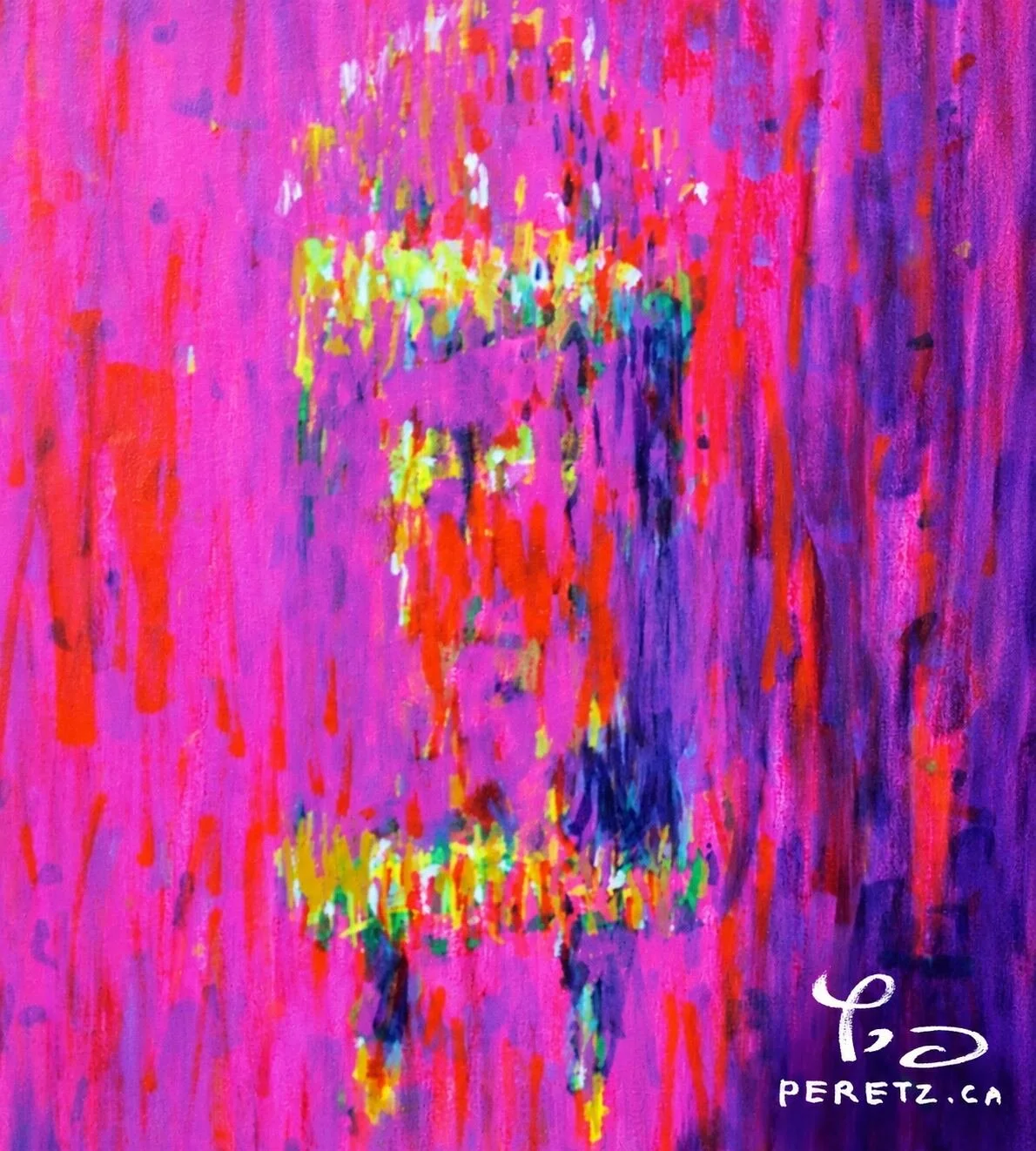
Timeless Torah

Full Day Ahead
Something for the little ones, too
The Kneidles!
Kids sing along. The lessons stay with them.
The Kneidles is an animated Shabbos adventure filled with original songs and practical Jewish lessons. When the family’s plans go wrong, the children step in to help get ready for Shabbos.
Full animated video · About one hour · $14.99 download
Buy the Full Video — $14.99How the download works
This is not a DVD or a subscription. The full video is an MP4 download. After purchase, save the file to your computer or a compatible device to watch offline. The download link lasts 24 hours after the first download; save your copy during that window.
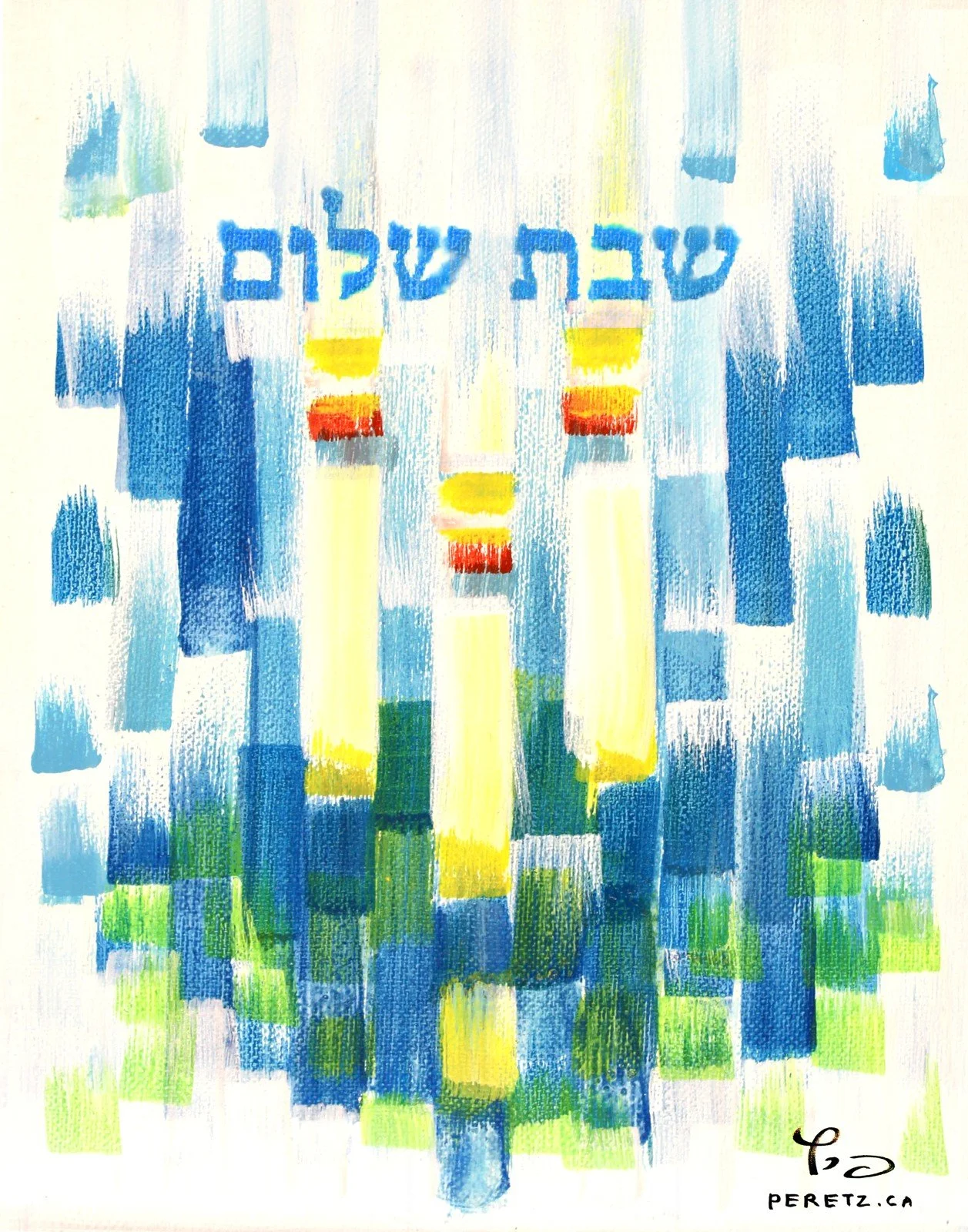
Shabbat Shalom
This painting may currently not be available.
Please reach out to find out, or:
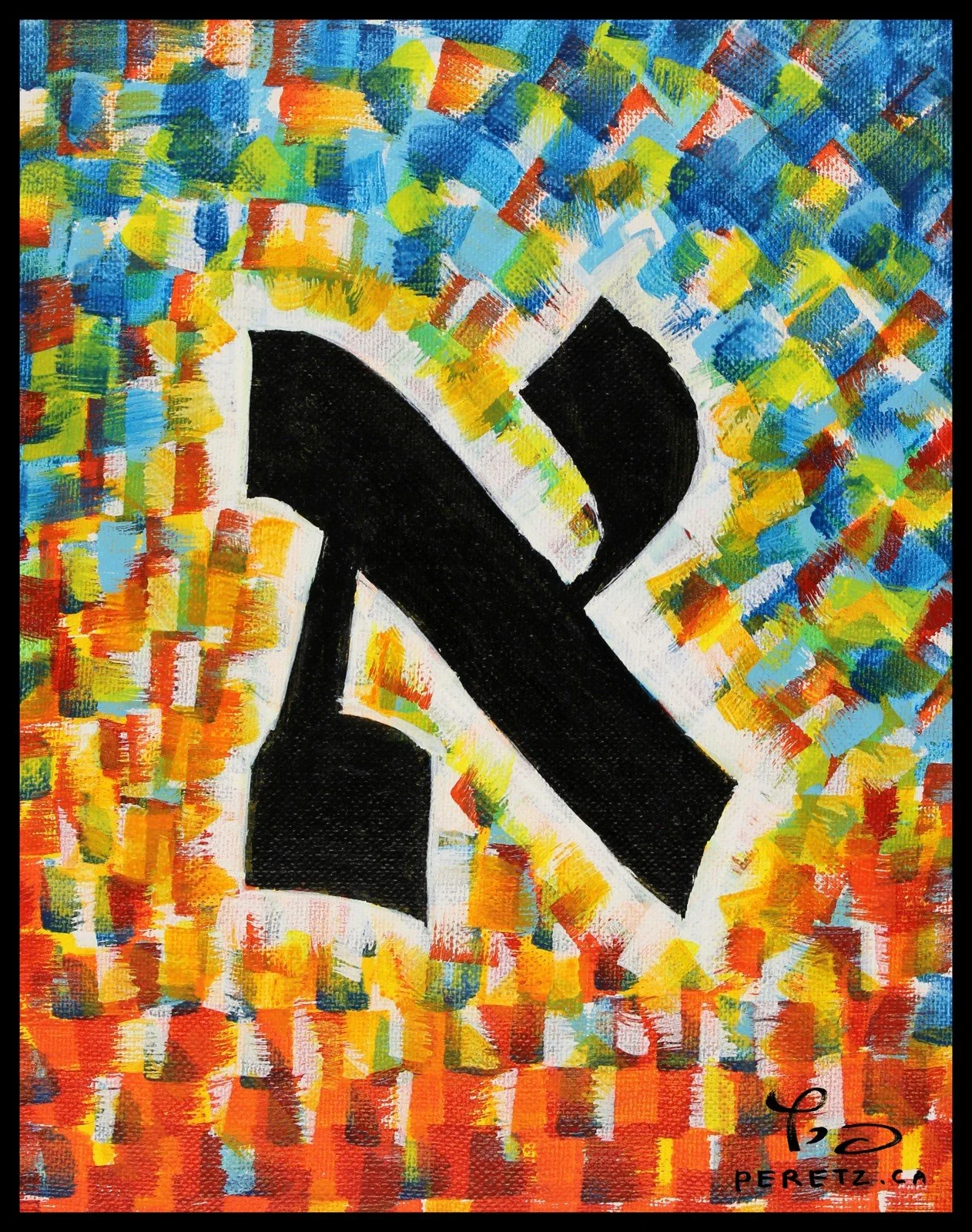
The Alef
This painting may currently not be available.
Please reach out to find out, or:
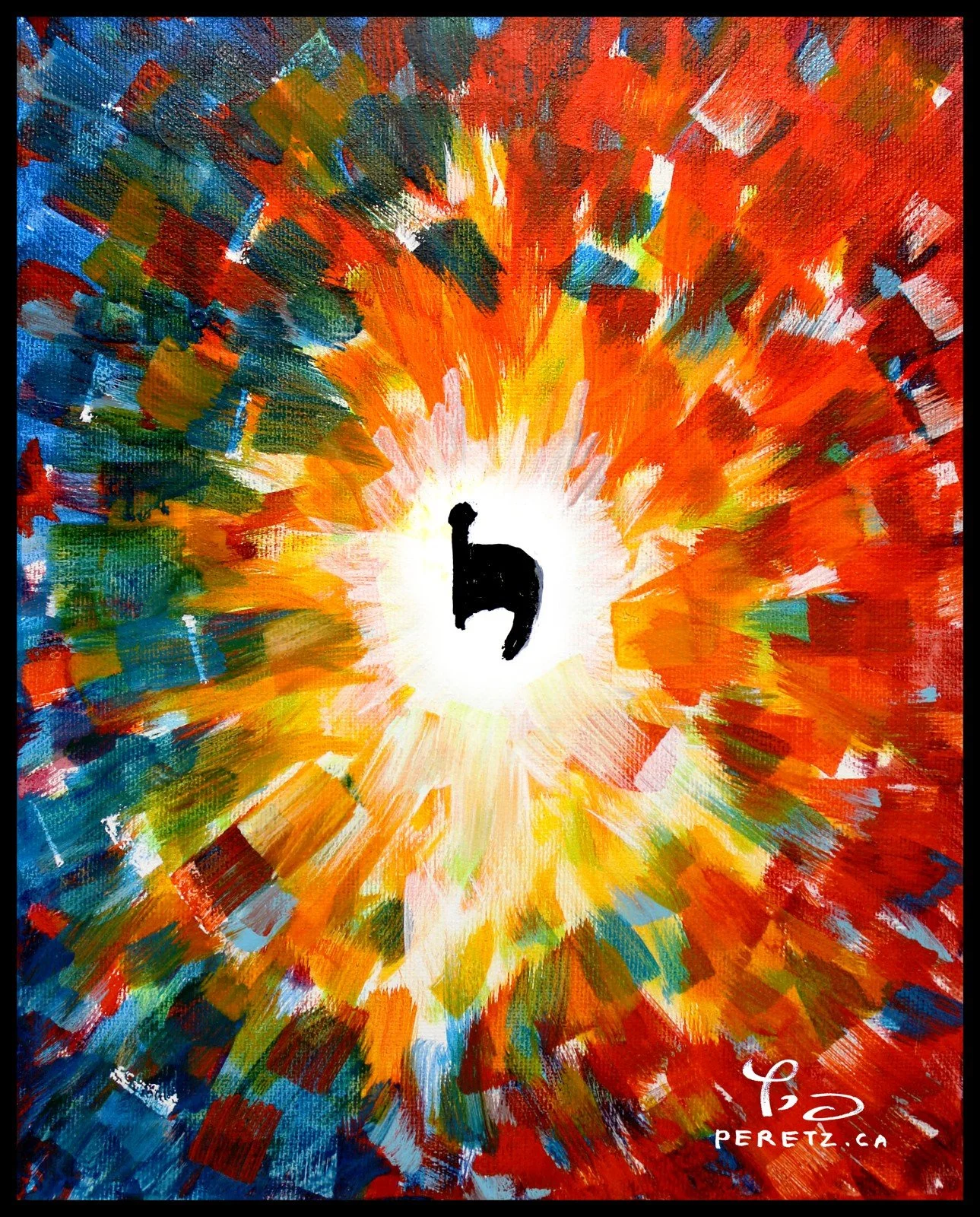
The Yud
This painting may currently not be available.
Please reach out to find out, or:
Baruch Hashem
The Inspiration
“Baruch Hashem.” Bless the Name of Hashem. Such familiar words, yet how much we are saying with them!
The Baal Shem Tov would make opportunities to ask people, “How are you? How is your family? Your livelihood?” He wanted to hear them answer, “Baruch Hashem,” thanking Hashem. An ordinary conversation could become an expression of gratitude to the One giving us life.
A Declaration of G-d’s Presence
Our five senses show us a physical world, with its natural forces and movements. They do not, on their own, reveal the Creator giving everything life. When we say “Baruch Hashem,” we declare that this world has an Owner and a purpose. The teachings of Chassidus explain blessing as drawing G-dly revelation into the world. We give that awareness a voice, bringing it into our own minds and into the lives of those who hear us.
I picture a host who has opened a home for everyone to enjoy, while remaining out of sight. The guests can behave as though everything belongs to them, or acknowledge the One welcoming them. Saying “Baruch Hashem” is a way of remembering our Host.
This world is not a jungle without an owner. A selfish outlook says, “My strength, my success, my importance.” Remembering the Creator lifts us beyond that. There is an infinitely great Designer, with intention and care, Who gives us life and asks us to use it meaningfully. That recognition can bring gratitude, honesty and responsibility into our thoughts, speech and actions.
Creation, Every Moment
The circular movement in this painting reminds me of the heavenly spheres and all the elements of existence. Everything is sustained by the will and word of Hashem. The world is being given life right now.
In Tanya, Shaar Hayichud Vehaemunah, the Alter Rebbe explains the Baal Shem Tov’s teaching that the Divine words of creation continue to give existence to every created thing. If that creative power were withdrawn for even a moment, creation would cease to exist.
The Hebrew letters and their combinations express the particular life-force of each creation. Through countless combinations and successive levels of concealment, Divine vitality reaches even physical matter. The spiritual worlds, the angels and everything we encounter depend on their one Source. In our daily prayers, we praise Hashem for continually renewing creation in G-d’s goodness.
A Reminder
This painting is intended to remind us that our life has a Source and a purpose, here and now. The heavens, the things around us and the breath within us are being sustained by Hashem at this moment. When someone asks, “How are things?” a thoughtful “Baruch Hashem” gives that awareness a voice.
My hope is that these words help bring holiness into our consciousness and into everyday life, pushing back the darkness of selfishness with gratitude to our Creator. May G-d’s presence become more revealed within us, within our communities and throughout the world, until “Hashem will be One, and His name One.” Speedily in our days. Amen.
Sources: The Baal Shem Tov on praising Hashem; The inner meaning of a blessing; Tanya, Shaar Hayichud Vehaemunah, chapter 1; Chapter 12; Zechariah 14:9.
This painting may currently not be available.
Please reach out to find out, or:
Naran Chai
The Inspiration
“NaRaN ChaY” is an acronym for the five levels of the soul: Nefesh, Ruach, Neshamah, Chayah and Yechidah.
In prayer, our soul can reach different levels of love and awe of Hashem. Our awareness of G-d’s presence everywhere, our preparation and our ability to focus all make a difference. So does the moment itself: an ordinary weekday, Shabbos, or Neilah at the close of Yom Kippur.
The teachings of Chassidus help us understand these depths of the soul and give them expression in our service of Hashem.
A Reminder
This painting is intended to remind us that our connection with Hashem has depths beyond what we may feel at any one moment. Thoughtful preparation and attention in prayer can help awaken that love and awe.
This painting may currently not be available.
Please reach out to find out, or:
Echod
The Inspiration
Inspired by the Chassidus Discourse,
Maamar: Ata Echad 5739
From The Rebbe
This painting may currently not be available.
Please reach out to find out, or:
Rayatz — Pensive
This painting may currently not be available.
Please reach out to find out, or:
Rayatz — Laugh
This painting may currently not be available.
Please reach out to find out, or:
Full Day Ahead
The Inspiration
The Torah describes Avraham and Sarah as “zakeinim ba’im bayamim,” aged and coming in their days. Later, it says, “And Avraham was old, ba bayamim.”
He came with all his days. The teachings of Chassidus explain that every day was valued and filled with purpose, from beginning to end. A filled-out day, positive and full of achievements.
That is the outlook that inspired this painting. Every morning, there is a new day ahead of us. Today can be greater than yesterday, brighter, fuller and more successful.
Chassidim of old, and Chassidim today, make a cheshbon hanefesh before sleep: an honest accounting of how the day went. We may see things we missed or did not fully accomplish. Yet whatever today held, and however good it was, we tell ourselves and our children: “דער מאָרגן וועט זײַן גאָר אַנדערש.” Der morgen vet zayn gar andersh. “Tomorrow will be entirely different.” Better, greater and fuller.
A Reminder
This painting is intended to remind us that yesterday does not limit tomorrow. Today may not have been as full as it could have been. Tomorrow, with Hashem’s help, I will move forward with renewed purpose, full steam ahead. A full, complete and wonderful day ahead.
Sources: Bereishis 18:11; 24:1. See Chassidic Insights, Chayei Sarah, chapter 24, on using every day for mitzvos.
This painting is currently not available, but you can order:
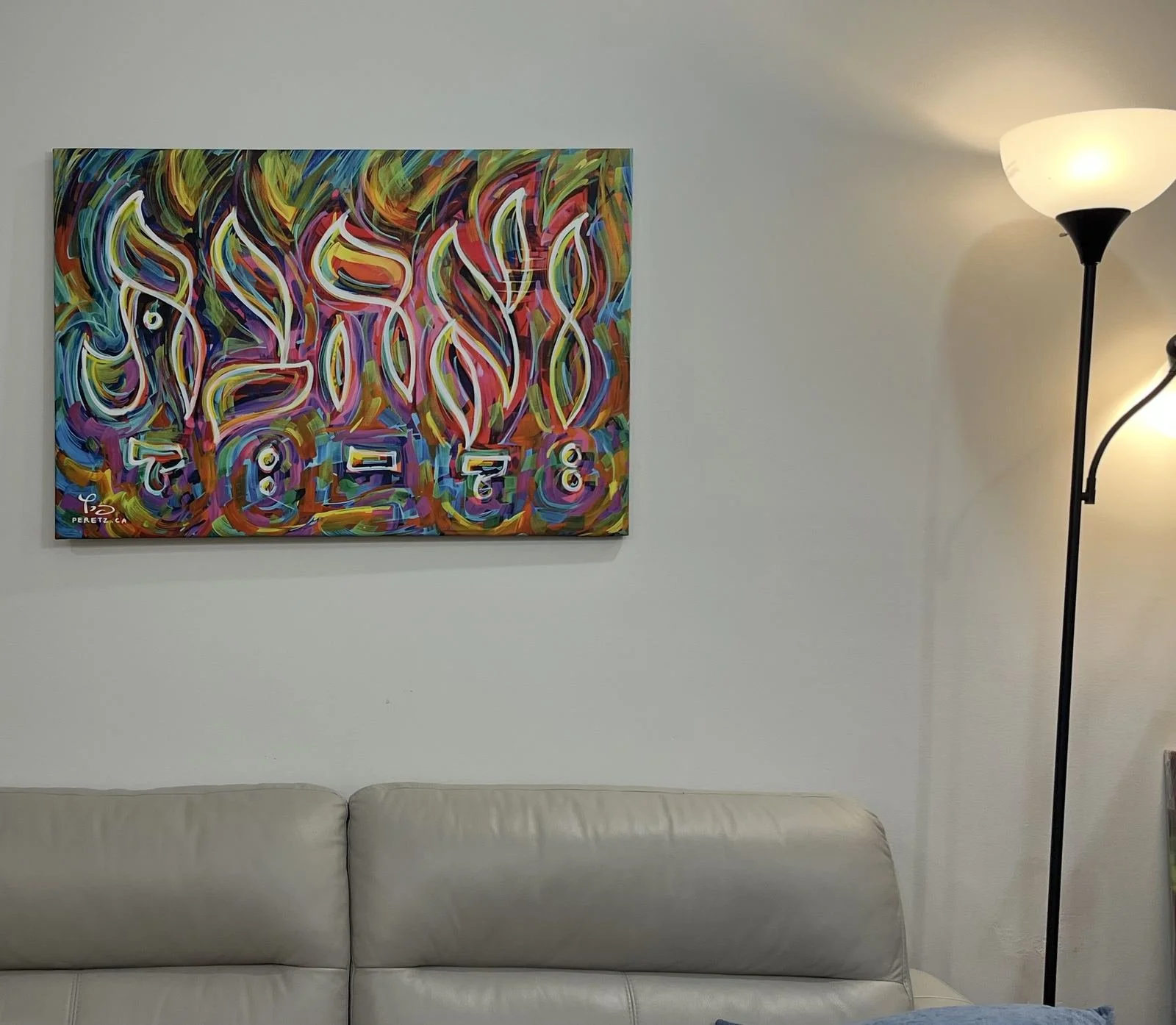
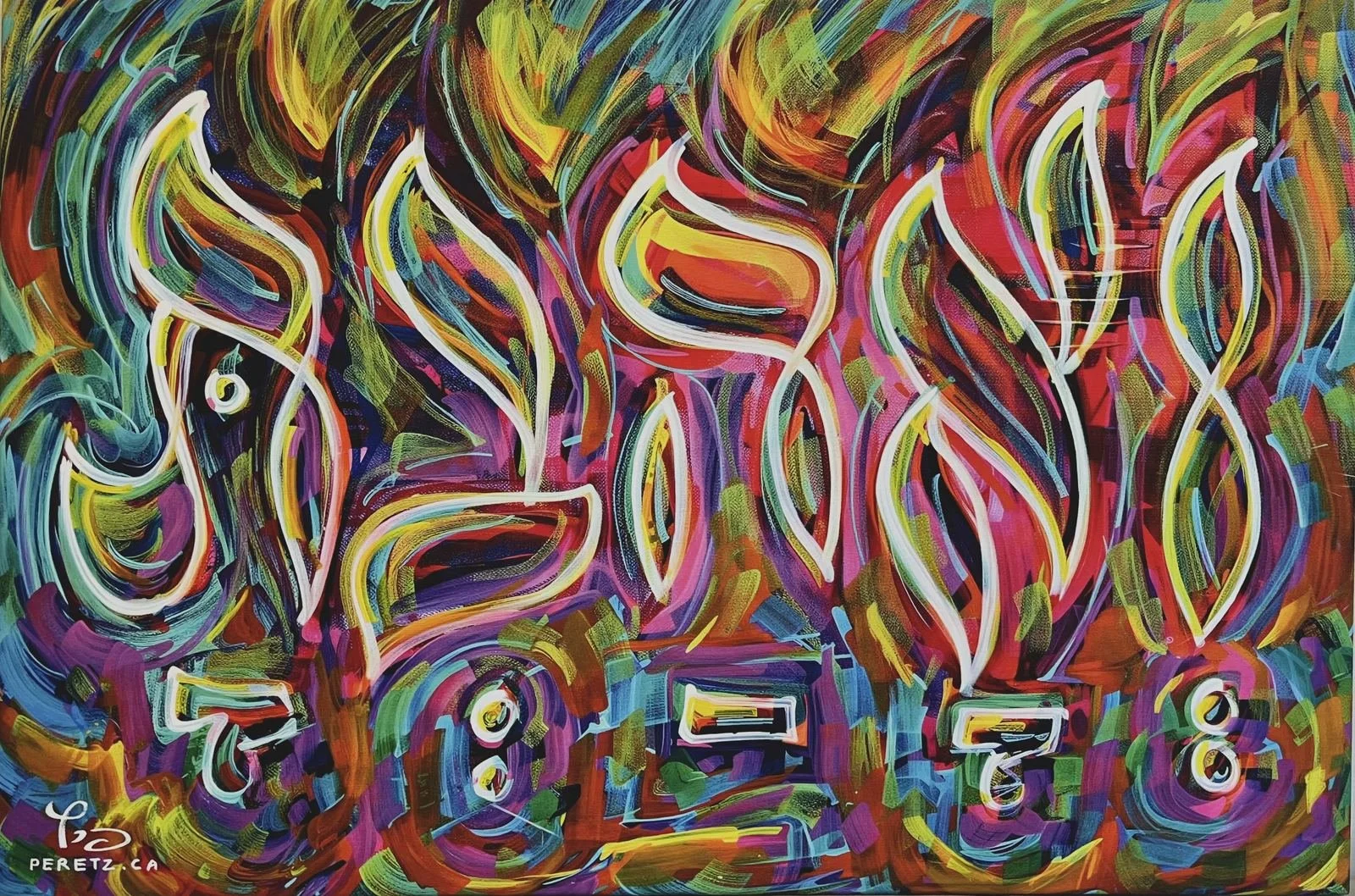
ViOhavto
You should love, you will love
The Inspiration
How can love be commanded? Isn’t it a feeling we either have or don’t have?
“ViOhavto” means “And you shall love.” The teachings of Chassidus also explain it as a promise: “And you will love.” Hashem gives us the beautiful power of love and asks us to direct it toward what is meaningful and true. We can choose what we give our attention to, what we appreciate and what we allow to fill our hearts.
The commandment calls us to contemplate what awakens love. We begin with the Shema, reflecting on Hashem’s oneness in this world and all the worlds above. Through that meditation, what we understand can become something we feel.
Love of Hashem
“And you shall love Hashem your G-d with all your heart.” Hashem loves us and wants us to discover what is worthy of our love, for our own benefit. G-d gives us life at every moment. The breath within us, the very possibility of being alive, comes from G-d.
When I appreciate how much I love my life, I can begin to love the One Who gives it to me. Tanya teaches us to contemplate Hashem as our true source of life. Chabad Chassidus opens many paths into this love, with depth far beyond what can be expressed here.
Love of Our Fellow
The Torah also commands us to love our fellow as ourselves. Tanya asks us to look beyond the body and recognize the soul. At their source in the One G-d, Jewish souls are truly united, like siblings with one Father. I picture candles kindled from one flame: each with its own light, sharing one source.
This recognition awakens compassion, kinship and love for a fellow Jew on the same spiritual journey. It also reminds me to approach every human being with respect and care. Every person is created in G-d’s image. Hashem placed me here with a purpose, and G-d placed the person before me here with a purpose too, whether I understand that purpose or not.
Just as I need to appreciate that my own life matters, I need to appreciate the life before me. Hashem has hopes for us both. We share the experience of life and the responsibility to help one another. Remembering this makes room in my heart for compassion and love.
Love of Torah
Hashem has not placed us in this world without guidance. Torah is G-d’s wisdom, care and love given to us through Moshe Rabbeinu, with the teachings of the prophets and our sages. It shows us how to live with truth, purpose and connection to G-d.
When we reflect on the wisdom and care within these teachings, we can come to love the Torah itself. We thank Hashem each morning for giving us the Torah, and again when called to the Torah in the synagogue. Its teachings bring meaning into our lives. The Jewish people are entrusted with 613 mitzvos, and humanity with the seven laws of Noah: Divine guidance for a world of goodness and blessing.
These three loves are bound together. Hashem, Torah and the Jewish soul are connected. Each love deepens the others, moving us to learn, to live what we learn and to share it.
Why These Colors?
I filled this painting with passionate colors because passion is a powerful gift. It can be directed toward passing pleasures, or lifted toward its highest purpose: love of life and its Giver, love of the Torah that guides life, and love of the person living alongside us.
A Reminder
This painting is intended to remind us that we have much that is worthy of our love. The life within us can awaken gratitude to its Giver. The person before us can awaken compassion and kinship. A Torah teaching can awaken appreciation for the wisdom and care Hashem has given us. These are the three meditations behind the painting.
Taking time for this is an ancient practice. The Mishnah describes the early chassidim preparing for an hour before prayer to direct their hearts toward Hashem. Rambam teaches us to settle our thoughts and recognize before Whom we stand. Chabad Chassidus continues this thoughtful preparation. We are all invited to learn how.
There are many levels of love, and much more to explore. May Hashem help us grow in both the simpler and higher forms of love, serving G-d with joy, good health and long, meaningful years. May this bring beauty into our space, meaning into our consciousness and love into our hearts. May we merit the redemption, with everlasting joy, speedily in our days. Amen.
Sources: Deuteronomy 6:4–5; Tanya, Kuntres Acharon 8, with explanation of the Maggid’s teaching; Tanya, chapter 44; Tanya, chapter 32; Pirkei Avos 3:14; The Rebbe on the three loves; The Rebbe Rashab on the three bonds; Mishnah, Berachos 5:1; Rambam, Hilchos Tefilah 4:16.
This painting may currently not be available.
Please reach out to find out, or:

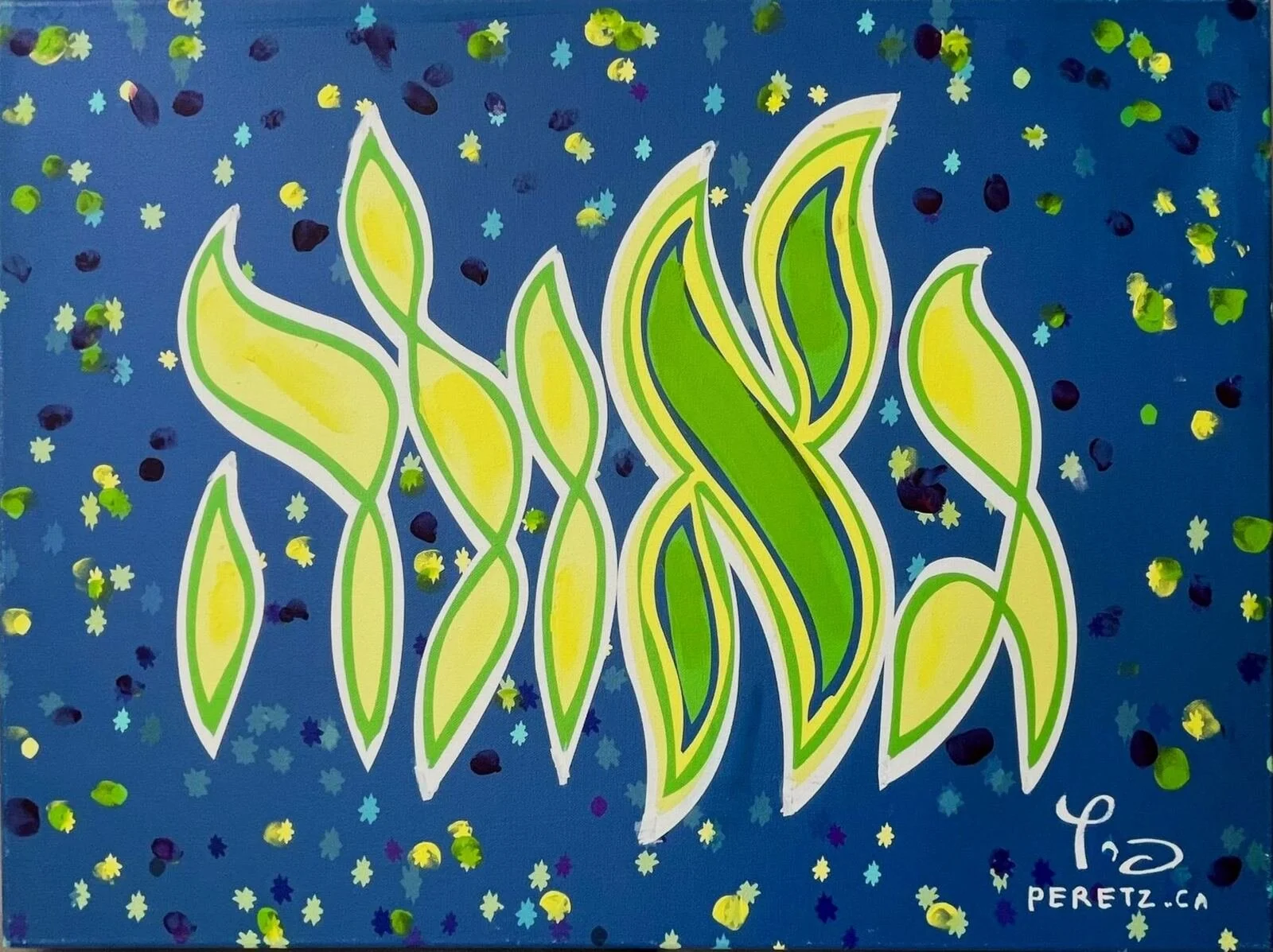
Geula
This painting may currently not be available.
Please reach out to find out, or:
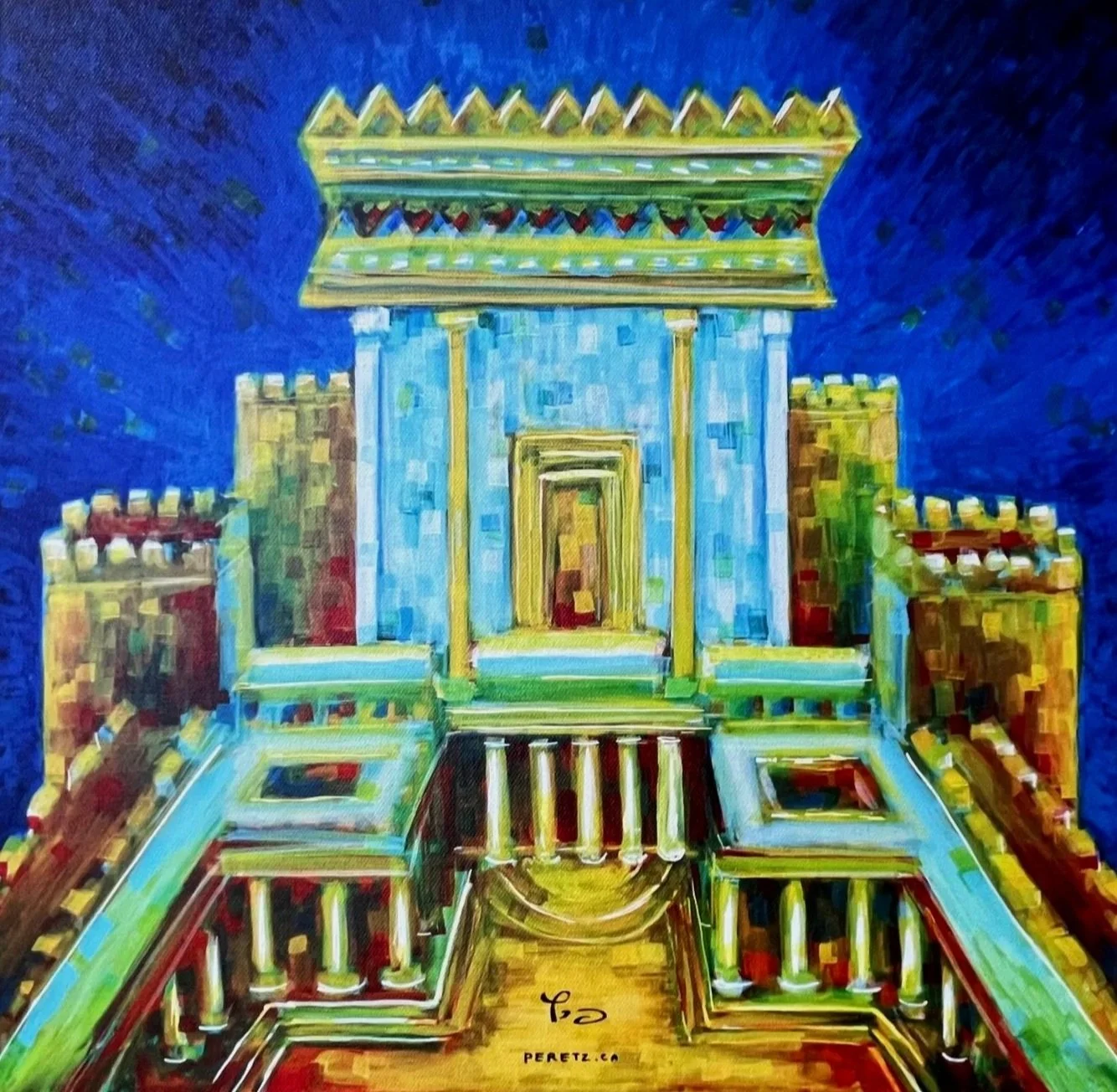
Mikdash
This painting may currently not be available.
Please reach out to find out, or:
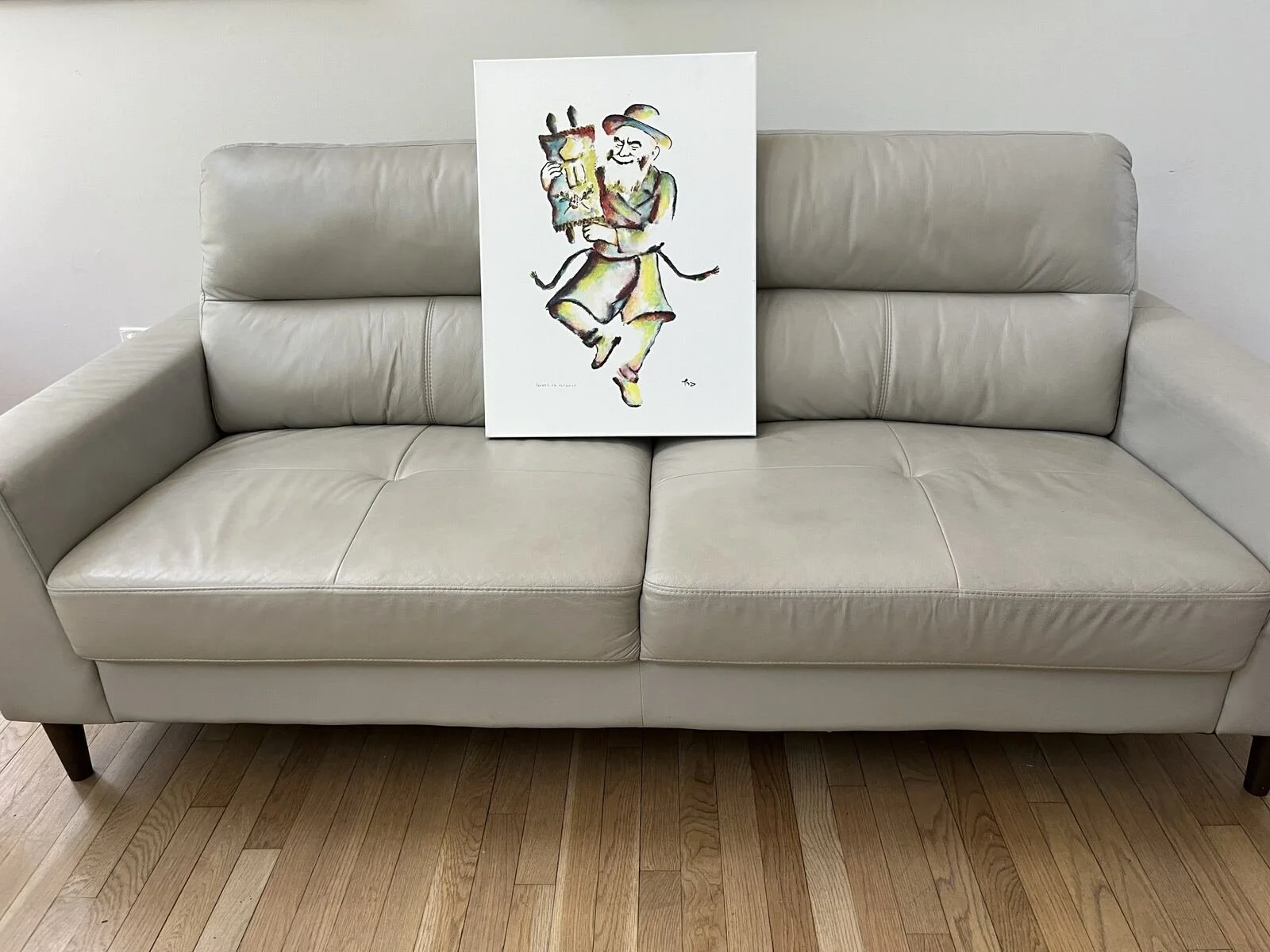
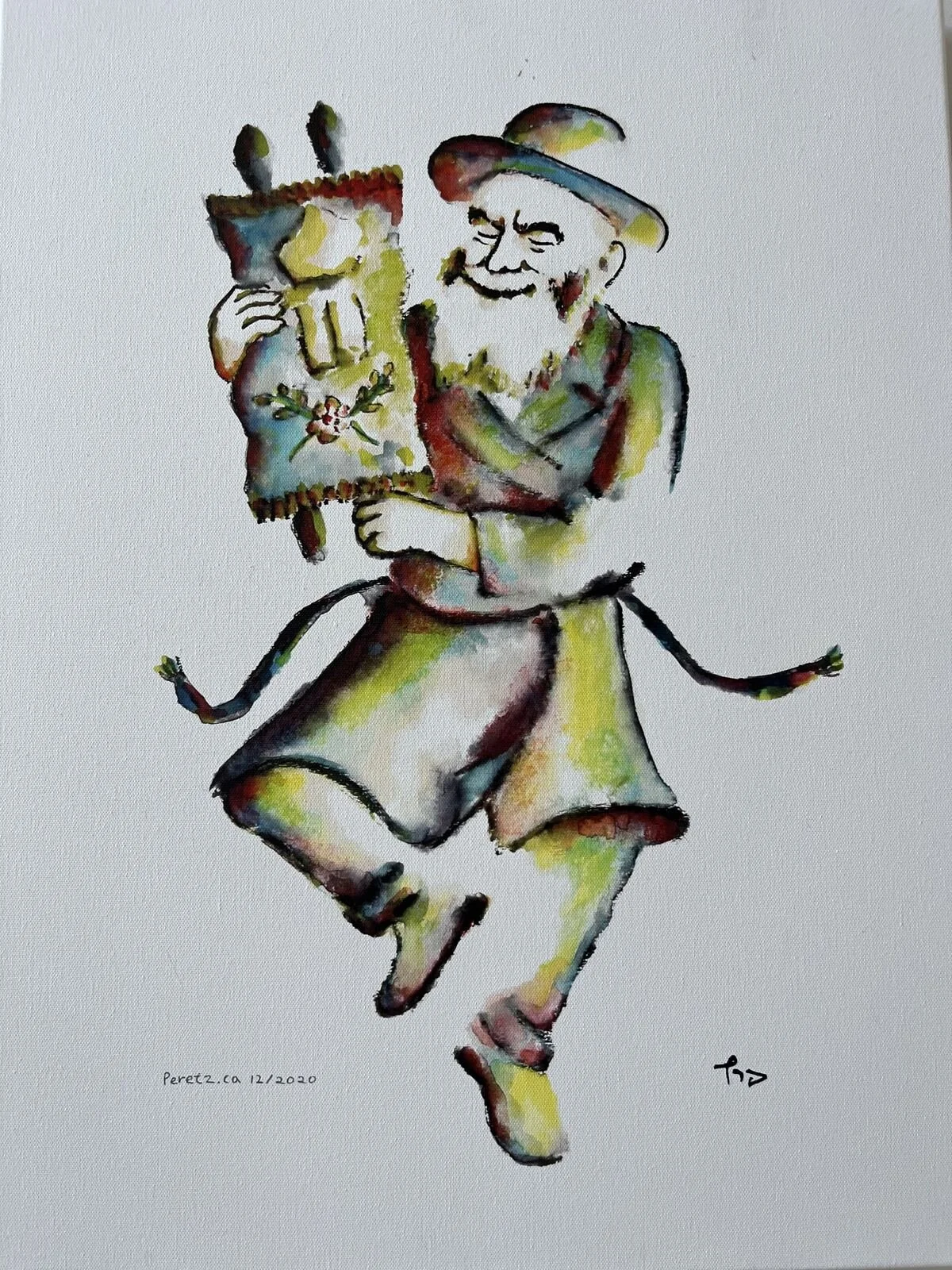
Torah Joy!
This painting may currently not be available.
Please reach out to find out, or:
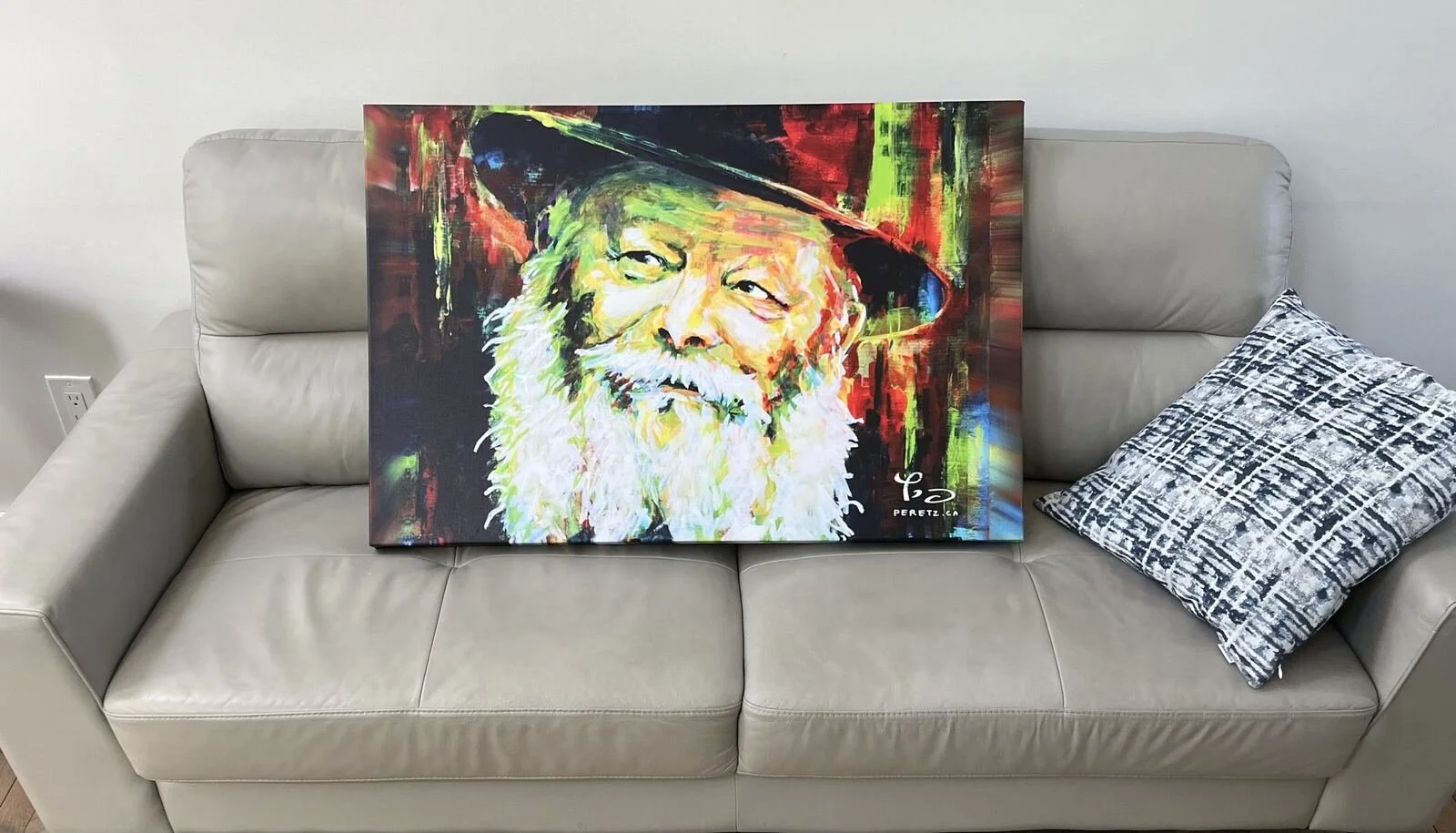
Rebbe Bright Side
The Inspiration
How could the Rebbe carry so much of the world’s pain and still radiate such joy?
People brought The Rebbe their troubles, illnesses and heartbreak. Enormous amounts of mail arrived with requests for help. The Rebbe was personally pained by wars, hunger, injustice and suffering throughout the world, including the suffering of people who never wrote. The Rebbe responded with compassion while carrying personal losses, including family lost in the Holocaust. The Rebbe and the Rebbetzin had no biological children, although they considered the Chassidim as their own children. Yet The Rebbe remained joyful, optimistic and full of light.
I merited to see the Rebbe on many occasions throughout my life. My father שליט״א frequently brought my siblings and me to see The Rebbe at farbrengens, the Chassidic gatherings, where I could sit for hours in front of The Rebbe and see The Rebbe with my own eyes. Looking back, I feel: how fortunate are the eyes that saw the holy face of this great tzaddik, this righteous man of our generation.
What I remember so strongly is the energy, positivity and brightness The Rebbe brought. That is why I painted The Rebbe in these bright colors. The Rebbe’s leadership continues through The Rebbe’s Torah, guidance and teachings.
Joy in Serving Hashem
The teachings of Chassidus explain the joy we can find in serving Hashem. When we recognize G-d’s presence and fulfill G-d’s will in this world, we bring G-d joy. Knowing that we are taking part in fulfilling G-d’s desire gives us a profound reason to rejoice. We can share in that joy, even while carrying real burdens of our own.
The Rebbe frequently taught the words of the Tzemach Tzedek, the third Lubavitcher Rebbe: “Tracht gut, vet zain gut.” Think good, and it will be good. This is a teaching of trust in Hashem, and to me it also has real physical ramifications. A positive outlook helps us find answers and strength. During my own experience with cancer, I saw tangible physical differences connected with my mindset. Positivity helped me heal.
A Reminder
This painting is intended to remind us that we can look at the bright side through life’s ups and downs, and bring that brightness into what we do. I wanted this portrait to be a wordless reminder of joy and optimism in the places where we live and gather. May we serve Hashem with joy, knowing the joy we bring G-d, until we merit to see everything as revealed good. Amen.
Source: The Rebbe's teaching on the Tzemach Tzedek's words, “Think good, and it will be good.”
Further sources: Tanya, chapter 33: sharing in Hashem’s joy; The Rebbe’s losses and rebuilding after the Holocaust.
This painting may currently not be available.
Please reach out to find out, or:
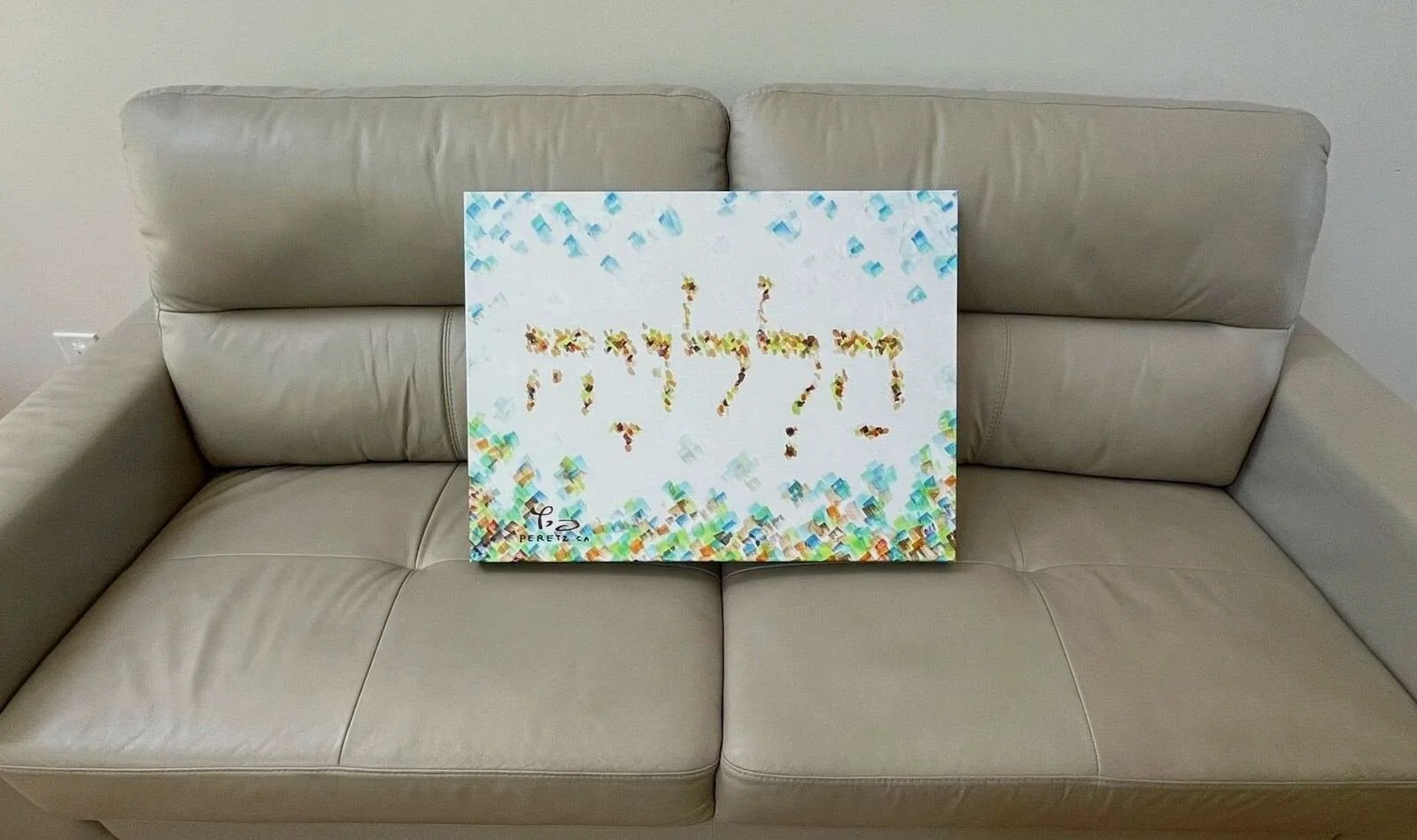
Halleluka
The Inspiration
“Hallelu-Ka” means “Praise G-d.” I was inspired by Pesukei D’Zimrah and Hallel, especially Tehillim, Psalm 117.
To me, this holy word carries one of the most soulful expressions of intense gratitude a living being can offer as praise and prayer to Hashem.
The letter hey is deliberately incomplete in this painting, so Hashem’s name is not fully spelled out.
A Reminder
This painting is intended to remind us that we can give voice to our gratitude. The goodness Hashem brings into our lives can become heartfelt praise, prayer and song.
This painting may currently not be available.
Please reach out to find out, or:
Sing Your Soul
The Inspiration
The musician in this painting is Yossi Piamenta, of blessed memory. His music, together with that of his dear brother Avi Piamenta, of blessed memory, has been part of the soundtrack of my life.
Yossi was such a holy rock and roller. His screeching electric guitar was somehow so sweet. He channeled holiness, devotion and joy through his guitar. Together with Avi and his flute, they were servants of Hashem disguised as rock and rollers. Their music and their feeling were so genuine and so heartfelt.
I remember seeing them play through the night at Simchas Beis Hashoeva on Kingston Avenue in Crown Heights, and the occasions when they played before the Rebbe. I also had the opportunity to perform with them on stage. Those are memories I treasure.
There is a backstory to this painting. I had my favorite Piamenta playlist playing very loudly in my studio. I worked for hours and hours, over several weeks, close to a month. Every stroke of paint was accompanied by their sound, their rhythm, their joy. I would not be exaggerating if I said I was literally dancing at times while painting it.
That is why I painted Yossi. I wanted to express my appreciation for the realness of their service of Hashem through music, and for the joy and devotion they shared with all of us. Every stroke was inspired by that music.
A Reminder
This painting is intended to remind us that our own gifts, energy and joy can serve Hashem. Yossi and Avi gave such heartfelt expression to that through their music, and it continues to inspire me.
This painting may currently not be available.
Please reach out to find out, or:
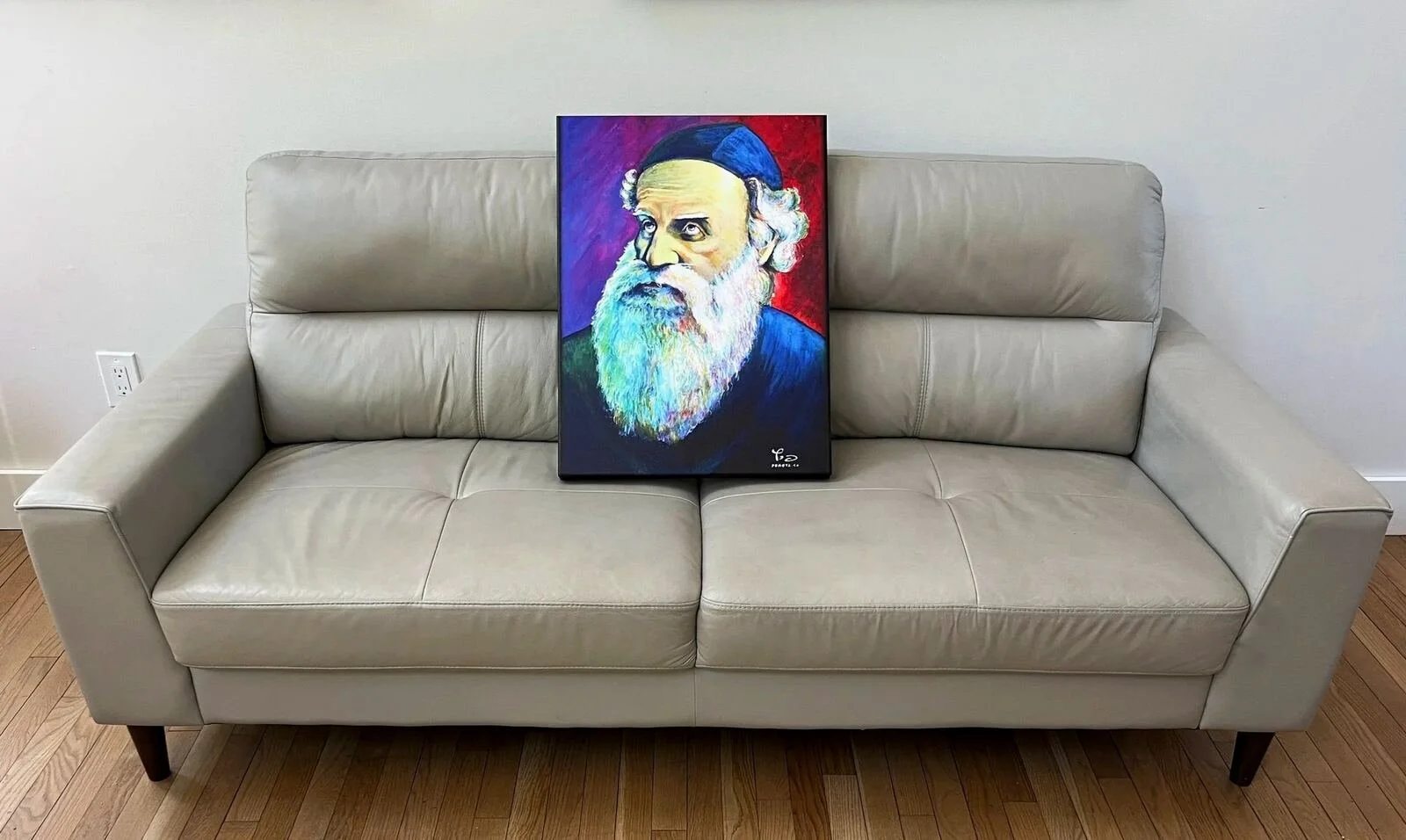
The Alter Rebbe
About the Alter Rebbe
Rabbi Shneur Zalman of Liadi, known as the Alter Rebbe and the Baal HaTanya, founded Chabad Chassidus. A disciple of the Maggid of Mezeritch, he authored Tanya and Shulchan Aruch HaRav. His teachings bring understanding, feeling and action together in the service of Hashem.
Based on the biography at Chabad.org.
This painting may currently not be available.
Please reach out to find out, or:
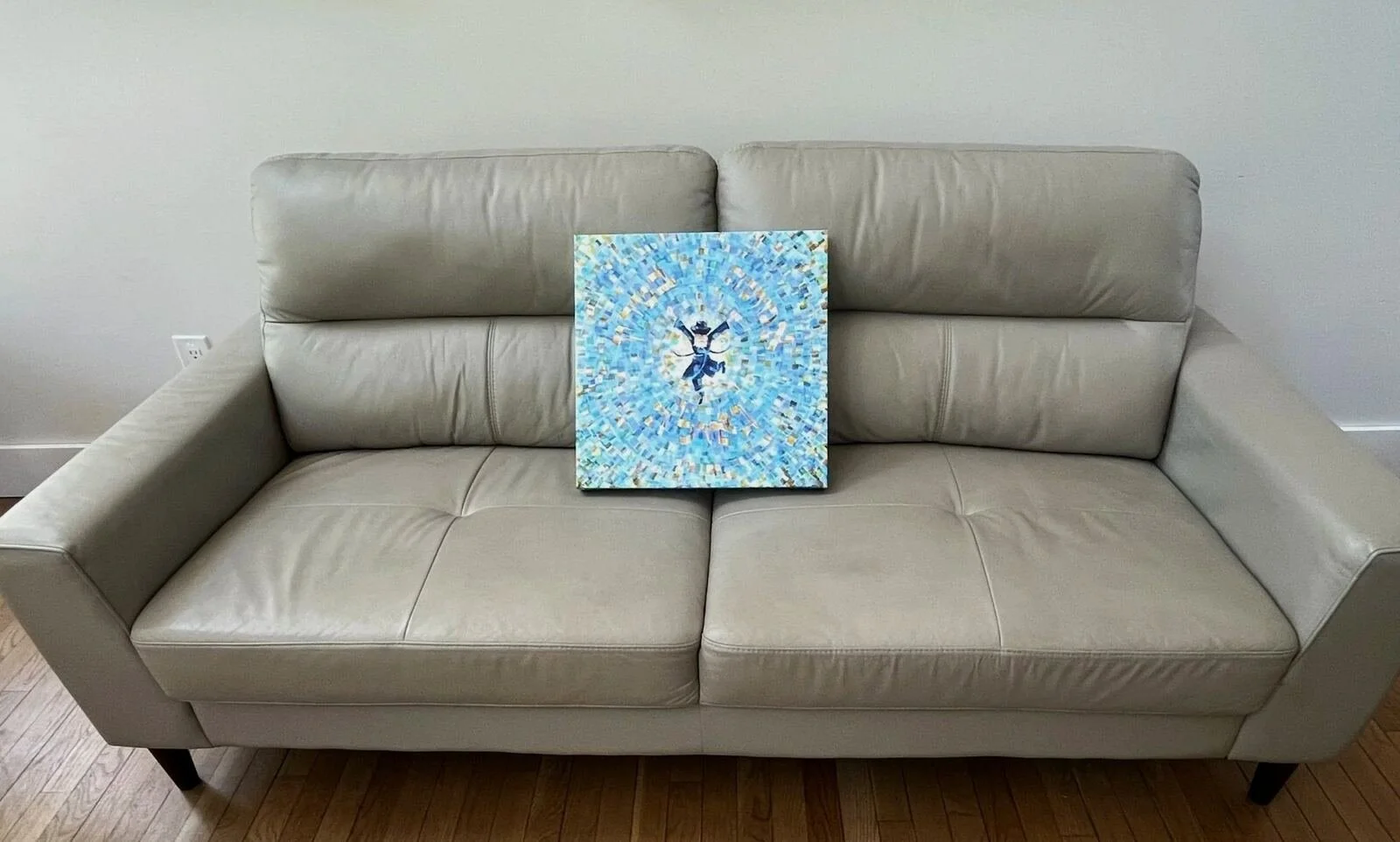
Emunah Joy!
The Inspiration
Emunah, Bitachon, Geulah: Faith, Trust, Redemption. The Hebrew words אמונה, בטחון, גאולה begin with the first three letters of the Alef Beis: א, ב, ג.
This painting was inspired by R’ Sholom Mordechai Rubashkin’s “Aleph Beis Gimmel” message. He connects our faith and trust in the coming of Moshiach with hastening the complete redemption: leaving the prison called galus, exile, and entering the time we have been waiting for, when we can serve Hashem in the third Beis HaMikdash.
A Reminder
This painting is intended to remind us that Emunah and Bitachon are part of our anticipation of Geulah. Faith, trust and redemption: Aleph, Beis, Gimmel. May we see it today!
This painting may currently not be available.
Please reach out to find out, or:
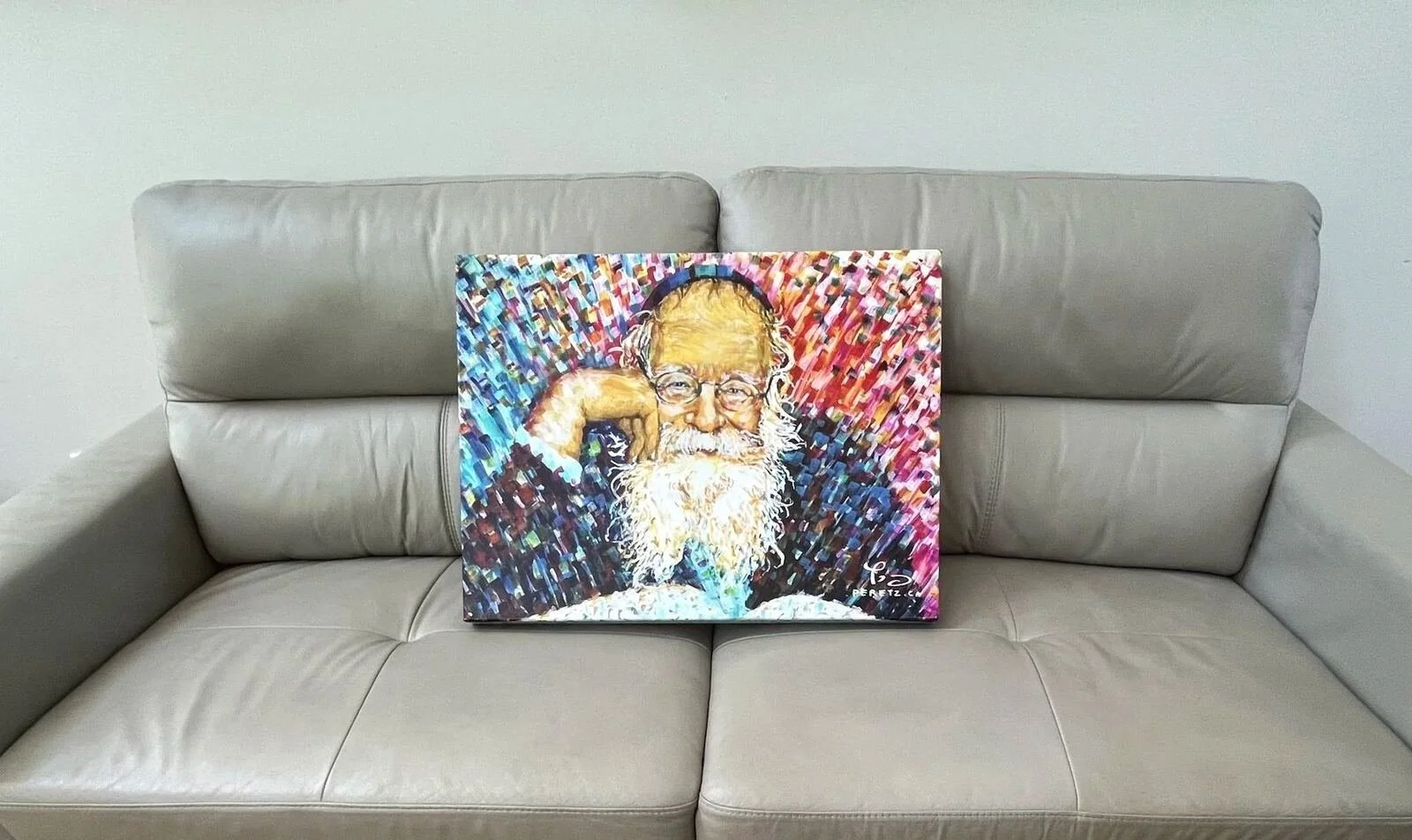
Torah Teacher
The Inspiration
Inspired on the occasion of Rabbi Adin Even-Yisrael (Steinsaltz) 80th birthday.
Rabbi Adin Even-Israel (Steinsaltz) is a beloved educator, founder of educational institutions, scholar and teacher of thousands of students around the world, who study his books on Talmud and Chassidus. Prolific author of more than eighty books, published in ten languages. More..
This painting may currently not be available.
Please reach out to find out, or:
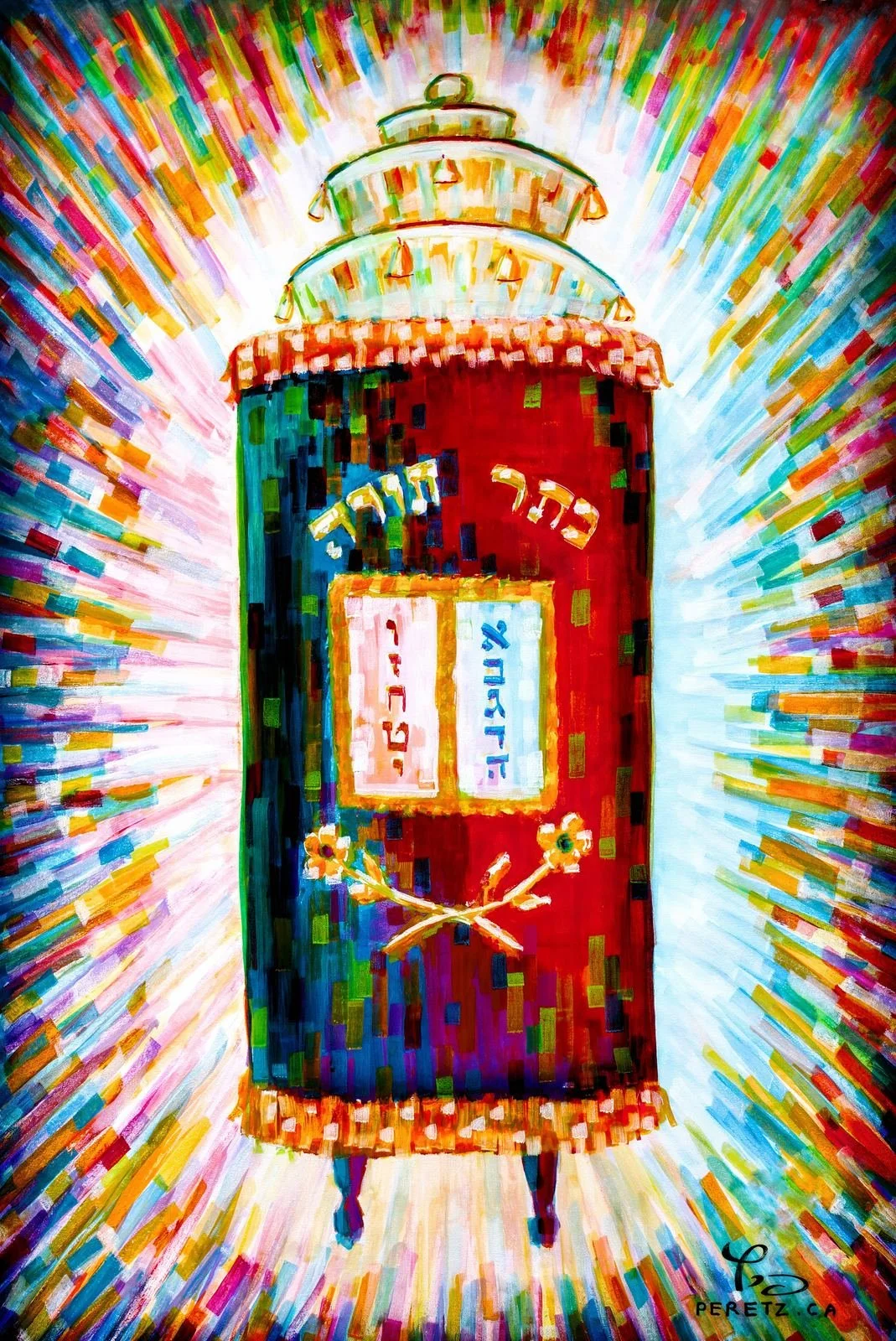
Torah Bright
The Inspiration
Torah is not just a list of rules…
I painted Torah Bright to express the mesmerizing beauty of its wisdom: rich, deep and bursting with life. A covered Torah scroll bursts with vibrant colors like a fountain of light. Behind that mantle of laws and measurements is a fountain of light, and of life itself, for those who live by its teachings.
That is what inspired these colors. Torah is Hashem’s wisdom, a gift from the Creator to guide our lives. The teachings of Chassidus reveal the light within its words, mitzvos and customs. As that wisdom becomes clearer, something changes in us. Understanding awakens love. Learning becomes a joy, even a feeling of bliss. What seemed distant or burdensome becomes full of meaning and light.
Just as mesmerizing colors can hold our attention and move us, the beauty of Hashem’s wisdom can fill our minds and hearts. There is always more to discover. As the Mishnah teaches, “One who increases Torah, increases life.” It adds life to our life.
A World of Meaning
Torah unfolds through peshat, its straightforward meaning; remez, its allusions; derush, its interpretive teachings; and sod, its secrets. Together they are called Pardes, an orchard. The teachings of Rabbi Shimon bar Yochai, the Arizal, the Baal Shem Tov and the Rebbes of Chabad reveal depths within this orchard. The light of the teachings of Chassidus helps us bring that wisdom into our minds, hearts and daily lives.
We are fortunate to live when so much of this learning is available. In books, classes, recorded lessons and on Chabad.org, we can study teachings once accessible to far fewer people. We can ask, learn and return to them, finding deeper meaning each time.
The Zohar speaks of an opening of wisdom above and wisdom below. The Rebbe connected this with both the spreading of Torah’s wisdom and extraordinary advances in worldly knowledge and technology. Those very tools can now help bring Torah to people around the world, preparing the world for redemption.
At Sinai, the Jewish people said, “Naaseh v’nishma”: we will do and we will hear. We begin with a commitment to live according to Torah. As we study, we discover more of the meaning and beauty within what we do. The mitzvos remain our foundation, filled with wisdom we can continue to explore.
A Reminder
This painting is intended to remind us that the light within Torah can shine in our lives, like the light and colors flowing from this Torah. A rule, a custom or a teaching may feel difficult to connect with because we have not yet discovered the life within it. The meditation behind these colors is that there is so much more to discover. The beauty of that wisdom can reach our emotions, awaken love for Torah and Hashem, and bring joy into the way we live.
“Taste and see that Hashem is good.” To me, that is an invitation to experience these teachings through study and living them. Once we begin to taste their depth, our appreciation can grow into gratitude, love and joy.
Torah is a tree of life. Its wisdom can illuminate our choices, bring purpose into ordinary moments and inspire the people around us. Learning and living it brings us closer to personal redemption, adding light to our homes and to the world.
May we experience Torah in its fullest, most vibrant richness, and fulfill its commandments with joy, love and inspiration. May its light bring life and healing, until the world is filled with knowledge of Hashem as the waters cover the seabed. May the new light shine upon Zion, and may we all have a part in the Torah that illuminates our lives. Amen.
Sources: Pirkei Avos 2:7; Proverbs 6:23; The four levels of Torah interpretation; Zohar I, 117a, explained in Likkutei Sichos, volume 15, Noach II; Exodus 24:7; Psalms 34:9; Isaiah 11:9.
This painting may currently not be available.
Please reach out to find out, or:
Your Artwork Order
A painting chosen for you. The details agreed together.
Your personal order confirmation will identify your artwork, format, size, total price and estimated completion window.
Confirm Your Order
For an original or hand-embellished canvas: 50% to begin, with the balance due after completion photographs and before shipping.
For a gallery-wrapped print: full payment once your order is confirmed.
Pay through the personal secure invoice supplied by Peretz. Your invoice states the amount due now, the remaining balance, shipping and any applicable tax.
Need your invoice or a change to your order? Include your name and order details below.
Art for Your Community
A collection that brings meaning to the spaces you share.
For Chabad Houses, schools, houses of worship and community centers. Choose a few favorites, tell me about your space, and we’ll shape the collection together.
Room photos and any additional references can be shared in our follow-up.
Your preferences will be included in the message below. Add your contact details to begin.
Give Meaning a Place
A gift the community can live with, learn from and enjoy.
Work with your institution and Peretz to dedicate a painting or help bring a collection to life.
A Collection With Purpose
The institution’s personal proposal will show its selected paintings, their planned locations and the dedication opportunities available.
Honor. Remember. Celebrate.
A dedication can honor someone dear, celebrate a milestone or carry a memory forward.
Artwork, sponsorship amounts and dedication wording are agreed with the institution before an order proceeds. Contributions are arranged directly with the institution.
Interested in supporting a collection? Tell us the institution and the painting or dedication you have in mind.
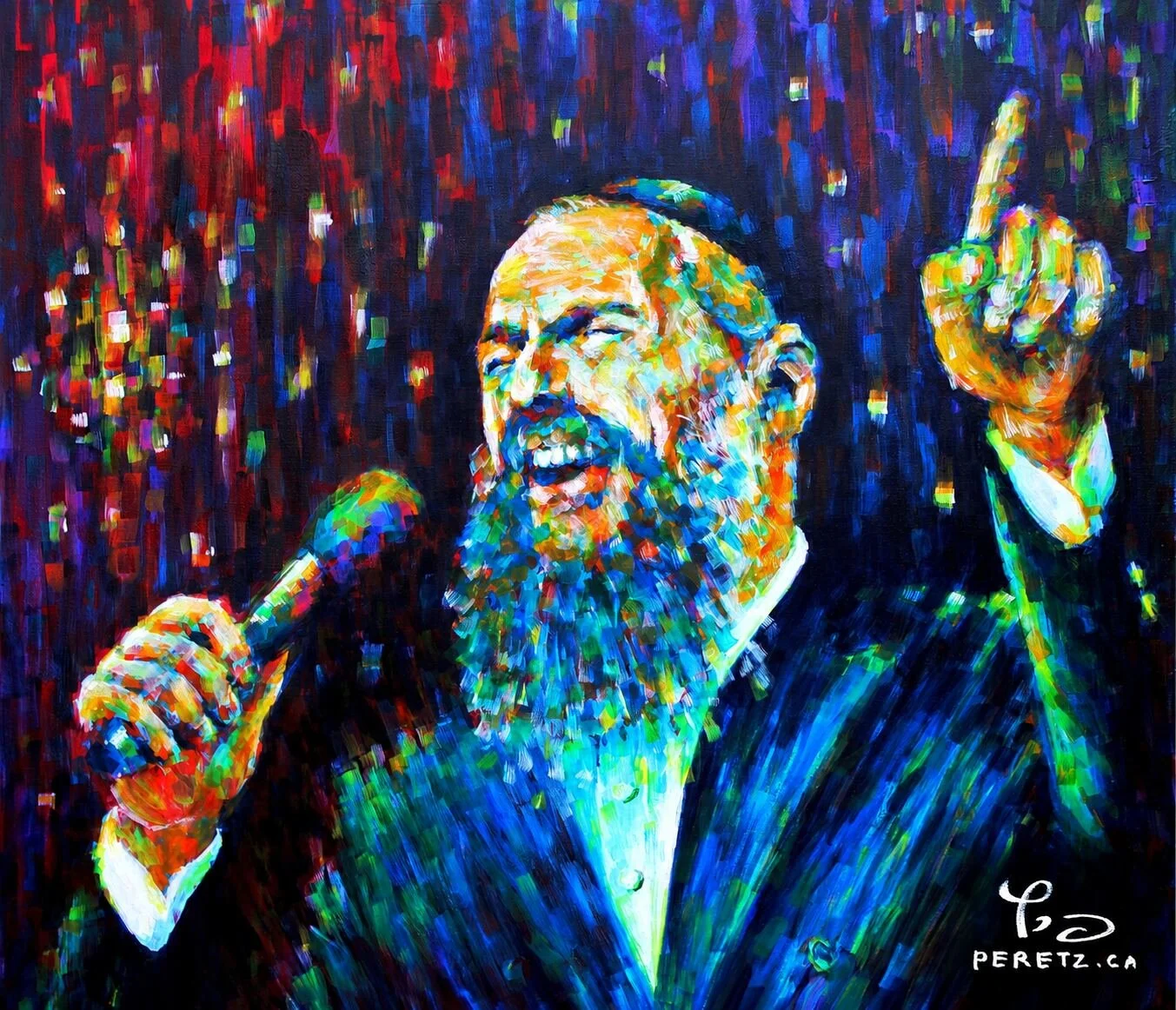
Pray and Sing
The Inspiration
Pray and sing! Need I say more?
Mordechai ben David has been part of the soundtrack of my life since I was very young. His music helped shape my love and enjoyment of music, and remains a huge inspiration to me.
I remember how fortunate I felt to attend his concert at Place des Arts in Montreal. Later, I had the opportunity to see him again and meet him as well. I still enjoy his music nearly every day. This painting expresses my appreciation for what he means to me now, and for everything he continues to give to Jewish music: joy, feeling and expression for Jews around the world.
If you’re anything like me, you’d agree that his voice, music and songs are a true gift to our generation and beyond. MBD’s music often blurs the line between singing and praying. How many times do you start singing one of his great songs, and before you know it, you’re davening?
A Reminder
This painting is intended to remind us that singing can become heartfelt prayer. Thank you, MBD, for sharing your great G-d-given gift with us all. May Hashem give you many more happy, healthy years full of joy and song. May we merit to pray and sing together with all of Klal Yisroel, with the coming of Moshiach and the complete redemption, immediately now!
This painting may currently not be available.
Please reach out to find out, or:
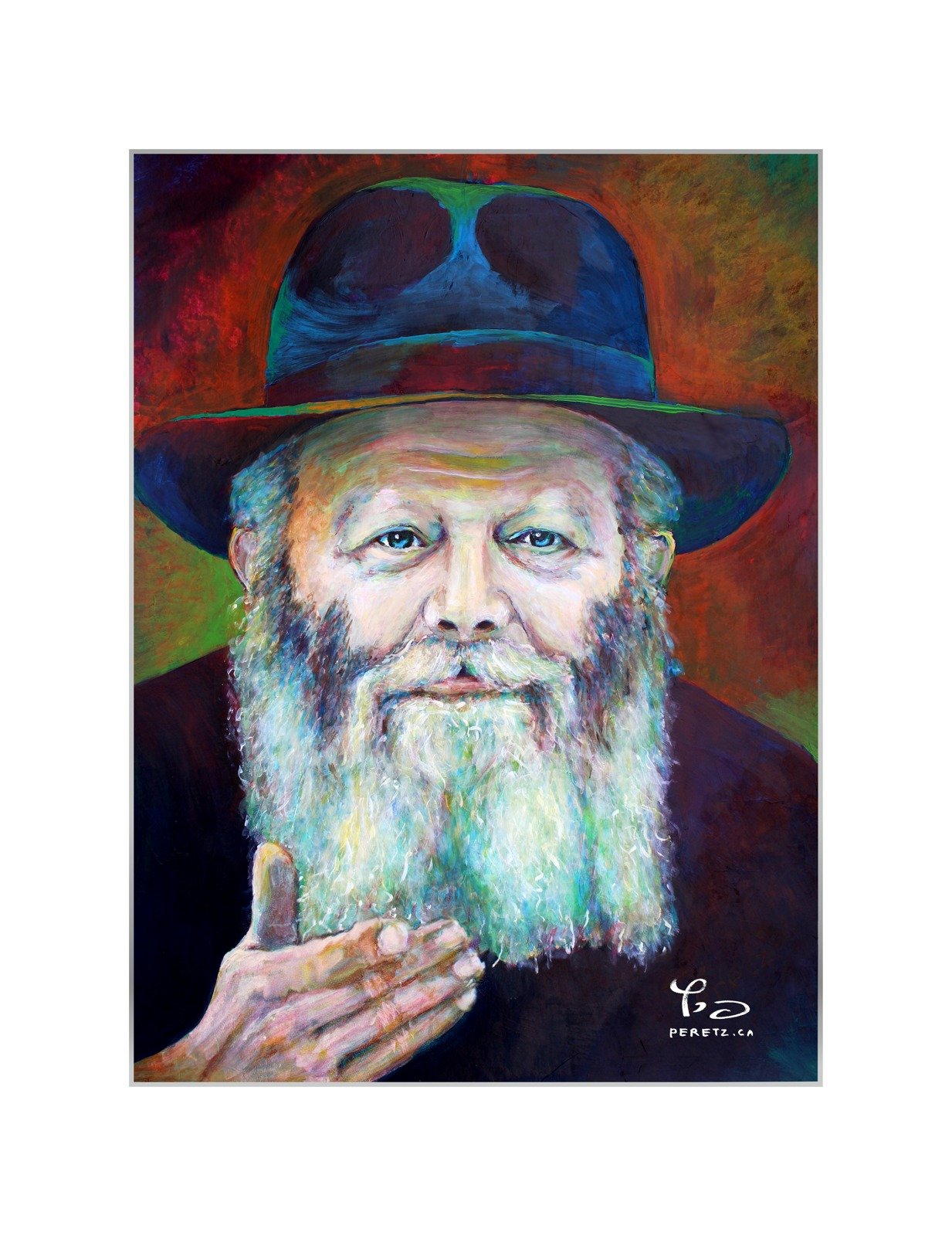
Say L’chaim
This painting may currently not be available.
Please reach out to find out, or:
L’chaim — Summertime
The Inspiration
“L’chaim” means “To life.” We raise our glasses and make a l’chaim. One person says “L’chaim,” and the other answers “L’chaim v’livracha!” To life and to blessings.
A Reminder
This painting is intended to remind us that those familiar words carry a wish for each other: may our drinking, in moderation of course, be to health and good outcomes.
So, l’chaim!
This painting may currently not be available.
Please reach out to find out, or:
Purim Joy
This painting may currently not be available.
Please reach out to find out, or:
A Note from a Farbrengen
The Story
In 1985, during a live telephone hookup with the Rebbe, I sketched a small portrait of Mr. Rosler, of blessed memory, seated in front of me in the Montreal Chabad shul basement. He was listening carefully, concentrating with his eyes closed. I had a pencil for taking notes, but I felt I had to draw that moment.
Over thirty years later, he approached me in shul, opened his wallet and handed me a tiny old envelope. Inside was that same drawing. He had carried it with him all those years, keeping his promise to show it to me when I was older, to remind me of my talent as a child and encourage me to paint.
I subsequently painted a color portrait of him and brought it to him as a personal gift in appreciation. His encouragement was, without exaggeration, very meaningful to me in pursuing my livelihood as a professional classical artist.
A Reminder
This painting is intended to remind us that someone’s encouragement can mean so much, even many years later.
Originally published April 1, 2016.
Source: My original account.
This artwork may currently not be available.
Please reach out to find out, or:
Adin
This painting may currently not be available.
Please reach out to find out, or:
Mikdash Vision
The Inspiration
“Did you anticipate the redemption?” The Talmud teaches that this is one of the questions a soul is asked after its life in this world.
The Chafetz Chaim explains in Tzipisa L’Yeshuah that we are meant to look out for redemption like a lookout standing on high ground, searching the distance. I picture someone eagerly awaiting a dear friend, climbing to a mountaintop to catch the first glimpse of him coming. That is the yearning behind Mikdash Vision.
It is the age-old Jewish hope and dream, promised in Torah: to see with our own eyes heaven revealed on earth, with the rebuilding of the third Beis HaMikdash, Hashem’s holy house in Yerushalayim. A world of peace and perfection as Hashem intended.
Rambam teaches that we must believe in Moshiach and await his coming. He writes that one who does not believe in him or await his coming denies not only the other prophets, but also the Torah and Moshe Rabbeinu. This anticipation is an everyday obligation, something we are meant to live with.
Since the destruction of the second Beis HaMikdash, Jews throughout the world have prayed every day for the return of Hashem’s glory to the Temple Mount, with the third Beis HaMikdash and the coming of Moshiach, our true and final redeemer.
The Rebbe brought particular urgency to this hope in our generation. The Rebbe spoke of the signs pointing to redemption and urged us to prepare to welcome Moshiach. To me, seeing prophecies coming to fruition in our times makes that hope feel close and alive. We anticipate so much more.
A Reminder
This painting is intended to remind us that redemption is something to look out for, all day, every day. The silhouette of the Beis HaMikdash emerges within the painting. Discovering it is a reminder of that anticipation: looking for what we have been promised, yearning to see it with our own eyes.
The Rebbe’s words stay with me: “Ot, ot kumt di geulah.” The redemption is coming, very soon. May our anticipation be a blessing for us and our families. May we merit to see the perfect and blessed world of redemption promised in the Torah, speedily in our days. Amen.
Sources: Talmud, Shabbat 31a; Chafetz Chaim, Tzipisa L’Yeshuah, chapter 3; Rambam, Hilchos Melachim 11:1; The Lubavitcher Rebbe, Bringing Mashiach Now (5751); The Rebbe, Shoftim, 7 Elul 5751, Besuras HaGeulah 37.
This painting may currently not be available.
Please reach out to find out, or:
Water Joy
The Inspiration
The Mishnah teaches that whoever did not see the joy of Simchas Beis Hashoeva never saw joy in his life. This celebration accompanied drawing water for the water libation in the Beis HaMikdash.
For me, the inspiration is the simplicity of serving Hashem with joy, even in the little things. Something as simple as carrying a bucket of water in the service of G-d is worthy of tremendous joy. It is G-d’s will. How much more so the things whose depth and meaning are obvious.
A Reminder
This painting is intended to remind us that even the smallest opportunities to serve Hashem are worthy of appreciation and joy. Whatever we are doing, when it is G-d’s will, we have that opportunity. Becoming sensitive to it can bring joy into the smallest movements of our lives, even something as simple as carrying a bucket of water.
This painting may currently not be available.
Please reach out to find out, or:
Rebbe Light
The Inspiration
Rebbe Light is my colorful watercolor and ink portrait of the Lubavitcher Rebbe, inspired by the Rebbe’s saying, “Think good and it will be good!”
The NFT Story
I also released this artwork as an NFT. To my knowledge at the time, it was the first NFT of the Rebbe—a meaningful milestone in bringing my artwork into a new medium.
Rebbe Light is available as a print, and I welcome inquiries about purchasing the NFT as well. The NFT and a physical print are separate purchases.
View the archived Rarible NFT link. Please contact me to confirm current NFT availability and purchase details.
Watercolor and ink by Peretz Schmukler.
This painting may currently not be available.
Please reach out to find out, or:
Timeless Torah
The Inspiration
Even through the hardest and darkest times, and despite so many efforts throughout history to erase Torah, Torah survives. Torah is the word of Hashem and the source of our life. It will never be erased.
I was inspired by the timelessness of its teachings: Hashem’s words, taught to us by G-d’s true prophets, beginning with our great teacher Moshe Rabbeinu, guiding and inspiring our lives in every generation, right up to today.
A Reminder
This painting is intended to remind us that Torah endures through difficulties, and its teachings continue to speak to our lives. We have a part in living them and carrying them forward.
This painting may currently not be available.
Please reach out to find out, or:

About Peretz
One of my earliest memories as a very young child is lying on the kitchen floor in Montreal with a pencil and a paper shopping bag my mother handed me. Long before I could properly write, I was already drawing.
Today I create paintings inspired by Torah, Chassidus, Jewish life, nature, beauty, and the belief that our surroundings shape how we think and feel. My goal is not simply to decorate a wall, but to create artwork that uplifts a space and quietly reminds people of meaning, hope, gratitude, and purpose.
Over the years I have worked as an artist, teacher, animator, multimedia designer, lecturer, and rabbi. I have taught students, created educational exhibits, worked during the early years of the commercial internet, produced and hand animated, frame by frame musical programs for children, and spent decades exploring how ideas can be communicated through words, music, images, and stories.
After my battle with cancer RL, I returned to painting with a renewed appreciation for life, family, faith, and the power that uplifting art can have in a person's environment.
Everything I create is my attempt to contribute something positive, meaningful, and uplifting to the world.
Welcome to PERETZ.CA.
More About Peretz
The Personal Story Behind the Artist
Early Years
I was born and raised in Montreal, Canada.
For as long as I can remember, I have been creating.
One of my earliest memories is lying on the kitchen floor with a pencil and an old-fashioned paper shopping bag, given to me by my mother תחי׳. I started drawing before I could properly write and perhaps before I could properly speak. Creativity was never something I consciously chose. It was simply part of who I was.
I grew up in a home where learning, faith, and creativity lived comfortably together. My father שליט״א is a rabbi and sofer. Although painting was not a major part of his life, I still remember a few rare occasions when I saw him late at night sitting at the dining room table with paints and brushes. Those moments stayed with me.
My mother, father, and siblings encouraged curiosity, creativity, and freedom of expression, and I remain grateful for that environment.
Around the age of eleven, I received one of my earliest public recognitions when I won a children's art competition organized through Montreal's Saidye Bronfman Centre for the Arts for designing a Rosh Hashanah greeting card. Students from Jewish schools across Montreal participated. It was one of those childhood moments that quietly reinforced the idea that creativity was something worth pursuing.
As a child, while other children sold lemonade on the sidewalk, I sold my drawings. My older sister Devorah helped keep track of the sales. I've been told that some of those early drawings still exist in people's homes today.
Growing Up in Chabad
From a young age, I became involved in creating artwork for community projects, especially the annual Lag B'Omer parades in Montreal. After full days of learning, we would spend long nights in large warehouses in Montreal's industrial district painting signs, banners, educational displays, floats, and parade artwork.
One of the people who left a lasting impression on me was Reb Volf Greenglass, a true great Torah scholar, chassid, and Kabbalist OBM. During the weeks leading up to the parade, he would come to the warehouse where we worked. What impressed me was that he did not simply stop by to observe. He would remove his hat and jacket, pick up a brush, paint alongside us for a while, encourage us, and then return to his other holy work to study and pray.
Seeing a person of his stature physically participate in the work taught me that talents are gifts meant to be used in the service of a higher purpose.
Throughout my childhood, my father regularly brought me and my siblings Shlita from Montreal to New York to be present at major Chassidic occasions with the Lubavitcher Rebbe. Although we did not live in Crown Heights, these visits had a profound impact on me.
I attended farbrengens, received Tanya, other books, honey cake, and dollars, and wine from the Rebbe, participated in children's gatherings, attended small-group yechidus settings, and witnessed many moments that helped shape my understanding of true holiness, purpose, and Jewish life.
One memory stands out vividly. On one occasion I sat beneath the Rebbe's table together with other children and remember the Rebbe lifting the tablecloth and handing cake to us. It is a simple memory, but one that remains with me to this day.
In 1985, during a live telephone hookup with the Rebbe, I sketched a small portrait of a man named Mr. Rosler OBM who was seated in front of me. Over thirty years later he returned that same drawing to me, that he had carried folded in a small envelope in his wallet with him all those years to show me one day my talent as a child and to encourage me to paint. I subsequently painted a color painting of him and brought it to him as a personal gift and appreciation for his encouragement that, without exaggeration, was very meaningful for me in pursuing my livelihood as a professional classical artist.
Around 1987, I created a black-and-white portrait of the Rebbe that became my first widely distributed published artwork. Prints were sold throughout the community. About a year later, after helping a store owner put on tefillin, I discovered one of those prints hanging in his office. Seeing my work unexpectedly appear in the world was both surprising and encouraging.
Music, Yeshiva, and Shlichus
Music has also been a meaningful part of my life. In 1989 I had the privilege of serving as drummer for Rabbi Shlomo Carlebach at a concert in S-Agathe, Quebec. Over the years I have played at weddings, children's rallies, community celebrations, and many other gatherings filled with music, joy, and Jewish life.
While studying in Morristown, I created and directed a traveling Chanukah and Purim theatrical production. I designed props, scenery, stage effects, recruited performers and musicians, coordinated productions, and performed as the drummer. We traveled to schools and community venues, bringing educational entertainment to children and families.
After my studies, I was sent by the Lubavitcher Rebbe as one of twelve rabbinical students on a two-year mission to Venezuela. There I studied, taught, organized together with my fellow Rabbinical students, educational activities, and worked within the local Jewish community.
After returning, I resumed my studies at 770 Eastern Parkway, the central Lubavitch Yeshiva. During this period I continued my Torah studies and later received rabbinical ordination from the Chief Rabbi of Montreal, the beloved, great and humble Gaon, Rabbi Pinchas Hirschsprung OBM.
After returning, I was repeatedly sent together with another rabbinical student to communities throughout South America and the Caribbean to help strengthen Jewish life through education, outreach, and community programs.
The Jewish Expo
From 1992 to 1993 I was given a leadership role as the leading artist in the creation of The Jewish Expo, a large traveling educational exhibition. While many people contributed to the project, I spent much of my time helping bring the exhibits to life—creating artwork, building displays, guiding volunteers, solving practical design challenges, and helping transform educational ideas into visual experiences.
Teaching, Multimedia, and the Early Internet
For many years after our marriage BH, much of my energy was devoted to teaching, community work, and helping young people.
In 1998 and 1999 I attended the Academy of Design in Montreal, where I studied digital art, animation, and multimedia.
Shortly afterwards I was hired by Idealab in Pasadena, California, during the early years of the commercial internet. There I worked on projects including Ice.com, creating branding, digital artwork, online advertising, product presentation graphics, and website design.
During my deep immersion in the development of commercial websites and online businesses while living in Pasadena, California, I was approached by a technology headhunter job recruiter with an opportunity to help develop and design a rapidly growing online gambling venture. The financial rewards would have been significant and potentially life-changing. Nevertheless, I declined. I felt strongly that if I was going to devote my creativity and energy to something, it should contribute something positive, educational, or meaningful.
That decision reinforced a pattern that has guided much of my life.
After returning to Montreal, I continued teaching while pursuing multimedia and educational work. I taught animation, multimedia, and interactive media at TAV College's technology program while also working with challenged teenagers and continuing my own learning and creative development.
Animation and Educational Media
My interest in using educational media eventually led me to the creation of The Mitzvah Team, and later The Kneidles, two animated musical projects created with strong encouragement from Reb Volf OBM.
My goal was to educate and engage the minds of Jewish children through FUN entertaining storytelling and music, to teach Halacha and Minhag and communicate positive values.
For many years, most of my creative efforts focused on teaching in the classroom, working as a teacher and coach for troubled youth, creating multimedia, animation, educational projects, and raising our family. Traditional canvas painting surprisingly occupied absolutely none of my time at all.
Returning to Painting
Then something unexpected happened.
On the 12th of Tammuz, I had a vivid dream in which I walked into a store filled with paintings. As I looked around, I realized every painting was mine. One image stood out in particular: a highly detailed ballpoint-pen portrait of the Previous Rebbe bearing my signature!
The dream affected me deeply because I had never imagined myself pursuing traditional painting in that way at all, especially as I was responsible to provide a livelihood for my family.
Later that day I asked my children which of my talents they felt I was underusing. To my surprise, one after another they answered: painting and drawing.
I took their response seriously.
I began with a ballpoint portrait of the Previous Rebbe as it appeared in my dream, then pencil portraits, and eventually painting in full color. The first paintings were terrible. The colors became muddy, and the results were frustrating.
But I continued learning, studying color theory, and experimenting. At the same time I was immersed in the Chassidic teachings of Ayin Beis by the Rebbe Rashab.
The combination of color theory and Chassidic thought eventually helped shape the visual language that became my current style.
Another memorable moment occurred while walking to 770 Eastern Parkway in Brooklyn. I struck up a conversation with a modern tourist and his wife from Israel, and as we spoke about what we each did for a living, I mentioned that I was an artist.
He replied that art is a very difficult way to earn a living unless an artist reaches a level of quality worthy of building a career around. As an example, he mentioned a painting called Rebbe Bright Side by an artist named Peretz.
Neither he nor his wife realized they were speaking to that artist.
When I told them who I was, they were genuinely shocked. I was deeply encouraged to further pursue art as a main livelihood. Ironically, shortly after that encounter is when I started my battle with cancer.
Illness and Recovery, Perspective
In recent years I faced one of the greatest challenges of my life: cancer.
The illness itself occupied roughly two difficult years, followed by several years of recovery.
One part of that story I can never overlook is the support of my family and the greater Jewish community in Monsey, Brooklyn, and Lakewood, NJ. In particular, my older brother Mayer devoted extraordinary effort, research, time, and personal sacrifice to helping me pursue healing and recovery.
His dedication carried me through some of the most difficult moments of my life, and I remain deeply grateful for his selfless commitment.
The experience profoundly impacted my perspective on life and its purpose.
One gentleman battling cancer kept one of my paintings nearby and looked at it every day for strength and encouragement.
Today
Today I BH live and work out of my home studio, where I live with my wife and children Shlita in Jackson, New Jersey.
I continue to paint, teach, study, write, create music, and develop new projects. Friends and neighbors occasionally gather in my home for learning and informal farbrengens with occasional musical evenings with kumzitz singing, instruments, conversation, and friendship.
People sometimes ask me whether I see myself primarily as an artist, teacher, or rabbi.
The truth is that I have never viewed those pursuits as separate.
To me they are simply different tools for accomplishing the same purpose.
The greatest lesson I have learned from Torah, Chassidus, and life itself is that fulfillment comes from becoming a channel.
A channel for truth.
A channel to see HaShem's beauty in creation.
A channel for uplift and encouragement.
A channel for the wisdom of Torah and its inner teachings.
A channel for the light and life of HaShem, the Creator of everything, Baruch Hu.
Whether through a painting, a song, a vort, a shiur, a conversation, an animation, or a simple act of kindness, my goal remains the same: to communicate something meaningful that helps us reconnect with a higher purpose, hope, goodness, and a deeper connection with HaShem Yisborach.
I am grateful for every opportunity to be such a channel.
If my artwork, teachings, music, or story speaks to you in some way, I would be delighted to hear from you.
— Peretz Schmukler
PERETZ.CA
Animation, Education, and The Kneidles.
The Backstory..
My interest in animation did not begin in a classroom. It began when I was a child.
One afternoon in first or second grade, I went home with a classmate after school. His family allowed television and, as part of their regular routine, they watched the afternoon cartoon programs.
I was fascinated.
The moving characters, stories, music, humor, and animation completely captured my imagination. I loved every minute of it.
When I returned home, I excitedly told my mother that we needed one of those television boxes in our house too so I could watch those wonderful programs every day.
My mother listened and then gave me an answer I never forgot.
She explained that although much of what was shown on television was entertaining, much of it was also silly, violent, or simply not worthwhile. Then she told me something that stayed with me for the rest of my life.
She said that when Moshiach comes, the world will be filled with goodness and even tools like television would be used for positive purposes. Entertainment would still be enjoyable, but it would also be uplifting, educational, meaningful, and beneficial.
As a child, I never forgot that conversation.
Years later, when I studied animation, multimedia, and interactive media, I often thought about it. I was excited as I sensed that this was my opportunity to realize that wish and hope that I had as a child, and that I was in a unique opportunity to do my part and create that reality.
At the same time, I was teaching children and working with young people. I saw firsthand how strongly media influences the mind. I also noticed that much of the content available to Jewish children was either unavailable, limited, poorly produced, or simply unable to compete with the quality and excitement of mainstream entertainment.
Later, as my own children grew, I felt that challenge even more personally. I wanted them to have access to educational media that was fun, engaging, professionally produced, and aligned with positive values.
Those experiences eventually led to the creation of The Mitzvah Team and later The Kneidles.
My goal was never simply to entertain.
My goal was to use music, storytelling, humor, characters, and animation to communicate mitzvos, halacha, good habits, positive character traits, Jewish values, and a love for Yiddishkeit in a way children would genuinely enjoy.
I discussed the idea for the educational animated musical entertainment for Jewish children and received strong encouragement from my Mashpia and mentor, Reb Volf Greenglass OBM, who believed that creative talents should be used in the service of HaShem.
Looking back, I realize that these projects were not only animation projects. They were an attempt to create the kind of educational and uplifting media that I wished existed when I was a child.
Thanks for visiting. If my artwork, teachings, music, or story speak to you in some way, you’re welcome to reach out to me using the form at the bottom of this page and join the conversation.
Peretz