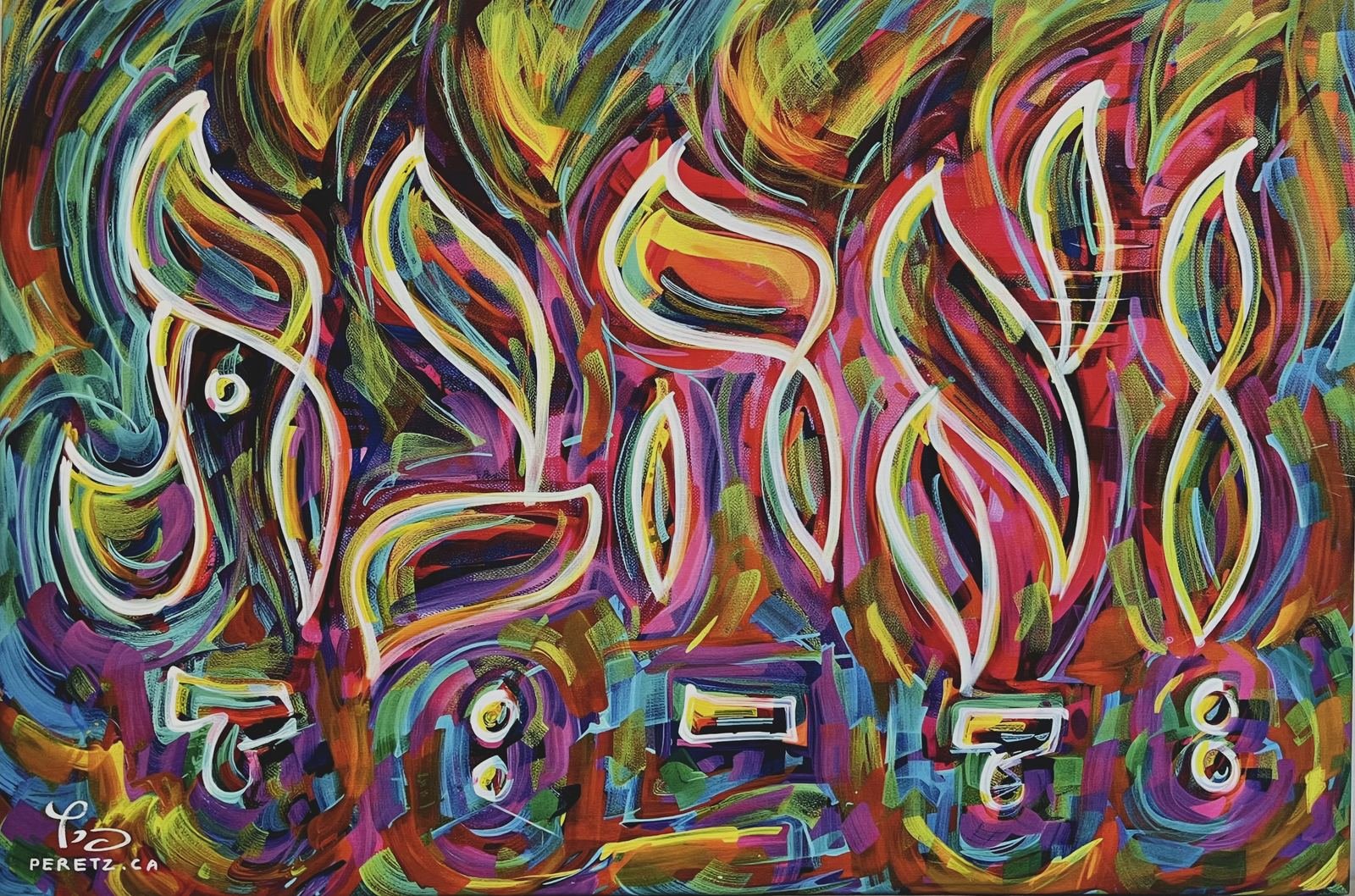
ViOhavto
You should love, you will love
The Inspiration
How can love be commanded? Isn’t it a feeling we either have or don’t have?
“ViOhavto” means “And you shall love.” The teachings of Chassidus also explain it as a promise: “And you will love.” Hashem gives us the beautiful power of love and asks us to direct it toward what is meaningful and true. We can choose what we give our attention to, what we appreciate and what we allow to fill our hearts.
The commandment calls us to contemplate what awakens love. We begin with the Shema, reflecting on Hashem’s oneness in this world and all the worlds above. Through that meditation, what we understand can become something we feel.
Love of Hashem
“And you shall love Hashem your G-d with all your heart.” Hashem loves us and wants us to discover what is worthy of our love, for our own benefit. G-d gives us life at every moment. The breath within us, the very possibility of being alive, comes from G-d.
When I appreciate how much I love my life, I can begin to love the One Who gives it to me. Tanya teaches us to contemplate Hashem as our true source of life. Chabad Chassidus opens many paths into this love, with depth far beyond what can be expressed here.
Love of Our Fellow
The Torah also commands us to love our fellow as ourselves. Tanya asks us to look beyond the body and recognize the soul. At their source in the One G-d, Jewish souls are truly united, like siblings with one Father. I picture candles kindled from one flame: each with its own light, sharing one source.
This recognition awakens compassion, kinship and love for a fellow Jew on the same spiritual journey. It also reminds me to approach every human being with respect and care. Every person is created in G-d’s image. Hashem placed me here with a purpose, and G-d placed the person before me here with a purpose too, whether I understand that purpose or not.
Just as I need to appreciate that my own life matters, I need to appreciate the life before me. Hashem has hopes for us both. We share the experience of life and the responsibility to help one another. Remembering this makes room in my heart for compassion and love.
Love of Torah
Hashem has not placed us in this world without guidance. Torah is G-d’s wisdom, care and love given to us through Moshe Rabbeinu, with the teachings of the prophets and our sages. It shows us how to live with truth, purpose and connection to G-d.
When we reflect on the wisdom and care within these teachings, we can come to love the Torah itself. We thank Hashem each morning for giving us the Torah, and again when called to the Torah in the synagogue. Its teachings bring meaning into our lives. The Jewish people are entrusted with 613 mitzvos, and humanity with the seven laws of Noah: Divine guidance for a world of goodness and blessing.
These three loves are bound together. Hashem, Torah and the Jewish soul are connected. Each love deepens the others, moving us to learn, to live what we learn and to share it.
Why These Colors?
I filled this painting with passionate colors because passion is a powerful gift. It can be directed toward passing pleasures, or lifted toward its highest purpose: love of life and its Giver, love of the Torah that guides life, and love of the person living alongside us.
A Reminder
This painting is intended to remind us that we have much that is worthy of our love. The life within us can awaken gratitude to its Giver. The person before us can awaken compassion and kinship. A Torah teaching can awaken appreciation for the wisdom and care Hashem has given us. These are the three meditations behind the painting.
Taking time for this is an ancient practice. The Mishnah describes the early chassidim preparing for an hour before prayer to direct their hearts toward Hashem. Rambam teaches us to settle our thoughts and recognize before Whom we stand. Chabad Chassidus continues this thoughtful preparation. We are all invited to learn how.
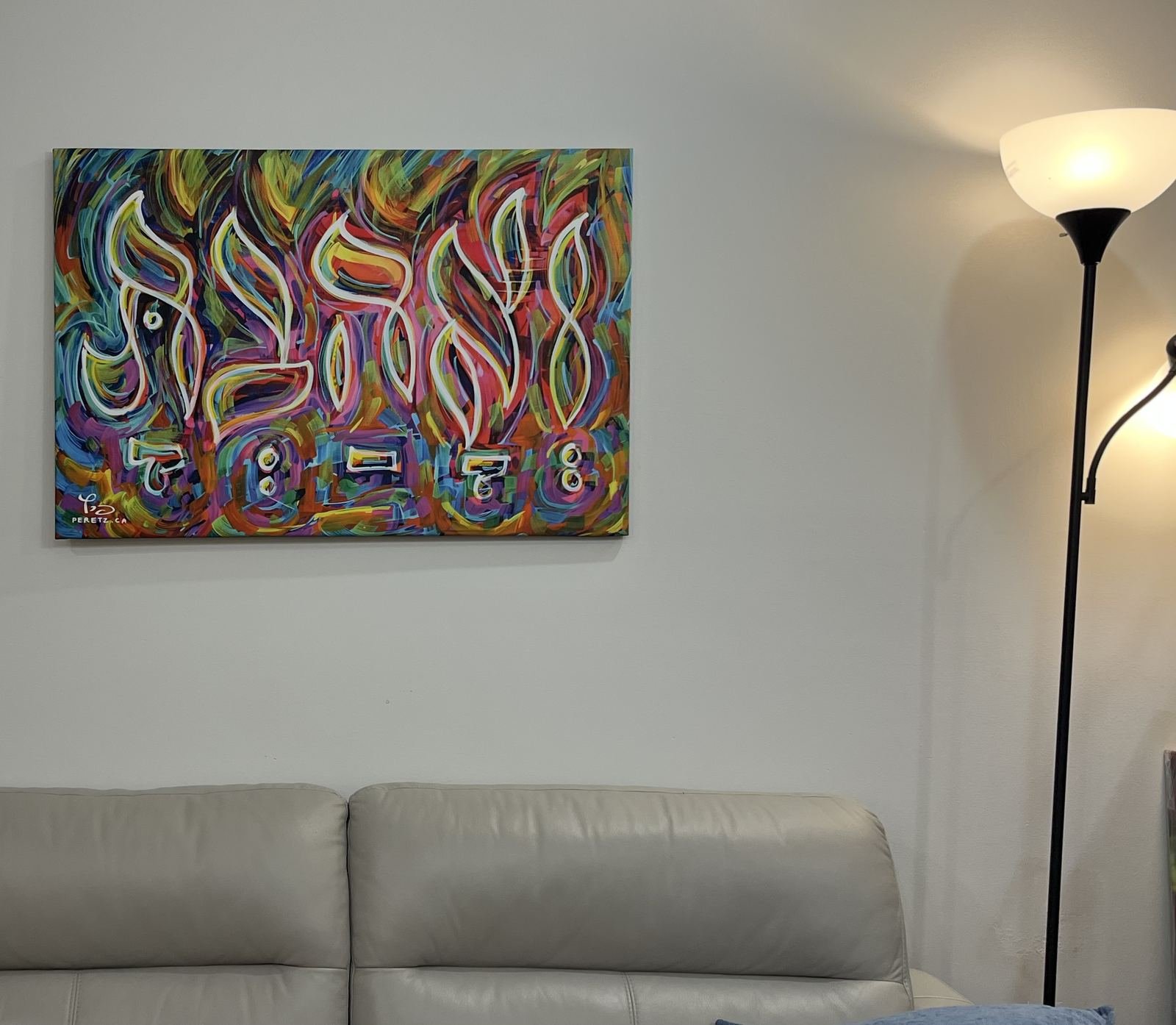
There are many levels of love, and much more to explore. May Hashem help us grow in both the simpler and higher forms of love, serving G-d with joy, good health and long, meaningful years. May this bring beauty into our space, meaning into our consciousness and love into our hearts. May we merit the redemption, with everlasting joy, speedily in our days. Amen.
Sources: Deuteronomy 6:4–5; Tanya, Kuntres Acharon 8, with explanation of the Maggid’s teaching; Tanya, chapter 44; Tanya, chapter 32; Pirkei Avos 3:14; The Rebbe on the three loves; The Rebbe Rashab on the three bonds; Mishnah, Berachos 5:1; Rambam, Hilchos Tefilah 4:16.
This exact painting may currently not be available, but either way, you can order: